Last updated – 7 October 2026
- Technical Key Design Constraints
- Cityfibre Benefits
- Background
- The Cityfibre Network- The journey from Exchange to your Premises
- Cityfibre Training
- Topography
- Cabinets Map
- Availability Rollout Map
- Installation Engineers System
- Testing and Patching
- Chatteris Phase 1 after 3 years and 2 months
- Fibre Exchanges in UK
Local Broadband Information Maps

Note – I have no affiliation with Cityfibre and this blog is an historical record of new infrastructure coming to the town, also I’m not a network infrastructure engineer, so please let me know if I’ve made any errors or omissions.
Technical Key Design Constraints
- Secondary Node Capacity: Typically serves 60 to 128 premises, arranged in clusters fed by a Primary Node (which serves ~480 premises).
- Drop Cable Limits: The standard design limit for a drop cable from the Customer Service Point (CSP) to the premises is generally 40 metres for overhead runs. Underground runs may extend further but are subject to the 150-metre rule from the Secondary Node; exceeding this usually triggers Excessive Construction Charges (ECC) or requires a new node.
- Split Ratio: The network utilizes a 1:32 passive optical split ratio per port on the Optical Line Terminal (OLT).
- Installation Scope: Standard installations cover up to 15 metres of external work and 10 metres of internal work on the ground floor. Deviations require specific wayleaves or incur additional costs.
- Cable Specifications: Uses pre-terminated drop cables (typically 2-fibre, single-mode) with SC/APC connectors. The minimum bend radius is critical (typically 20mm) to prevent signal loss.
Cityfibre Benefits
Cityfibre do not sell broadband services directly, instead they have partnered with ~30 providers, including TalkTalk, Vodafone, Giganet, Sky and Zen to give you more choice, also as Cityfibre have installed there own fibre tubes throughout the town, other companies can rent these for their dedicated fibres.
Background
CityFibre is expanding its full fibre broadband network to Chatteris, Cambridgeshire. This initiative is part of a broader £122 million Project Gigabit plan to upgrade hard-to-reach areas across the county, benefiting approximately 45,000 rural homes and businesses .(newswire.telecomramblings.com)
In Chatteris Netomnia primarily utilized existing Openreach physical infrastructure, CityFibre, however, has expanded on this by installing its own equipment, such as ‘Toby’ boxes, to extend connectivity to areas with direct-buried phone lines that Netomnia cannot serve .(chatteris.biz)
The first document relating to Cityfibre coming to Chatteris was in July 2023, (incidentally this was 7 months after Netomnia went live).
Infrastructure deployment is moving at pace since March 2025 with construction activities observed in various parts of Chatteris, the first cabinet was installed in Whitemill Road, January 2025.
For the most current information on availability in your specific area, it’s advisable to check the CityFibre postcode checker or contact local Internet Service Providers (ISPs) offering CityFibre services.
Above is a Chat GPT answer to a query.
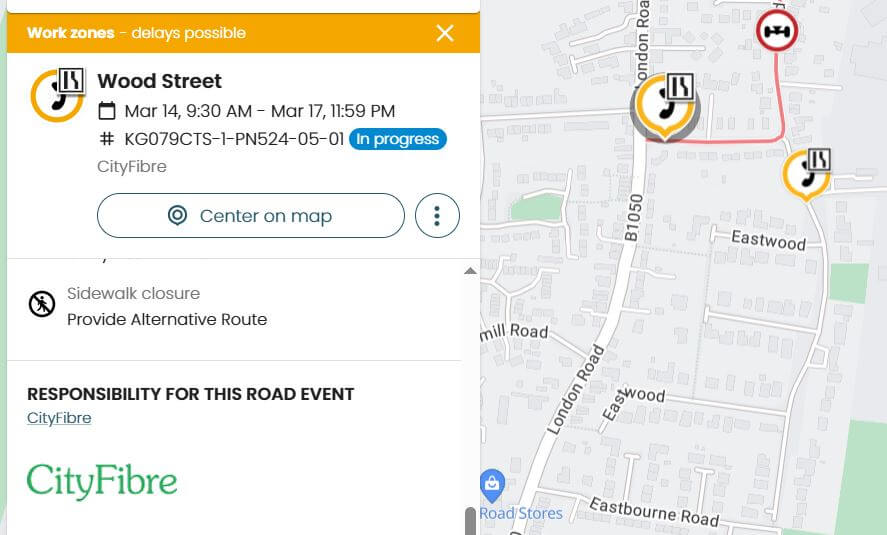
I must admit to being surprised that CityFibre are installing their own infrastructure in Chatteris as they will be competing with established overbuilt providers, such as:
- BT Openreach
- Virgin Media
- Netomnia / Youfibre
The infrastructure installation method seems nearly identical to the Netomnia roll out, i.e. making extensive use of BT ducts, however, Netomnia did not install street cabinets or pavement ‘toby’ boxes in Chatteris or install specific poles to serve remote area, whereas, Cityfibre have.
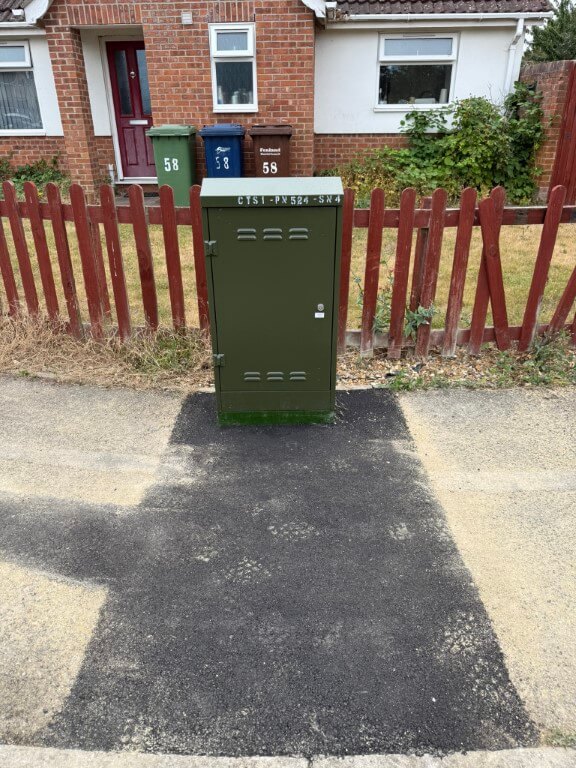
Street cabinets manufactured by Altex and Keltech, supplied via HellemannTyton:
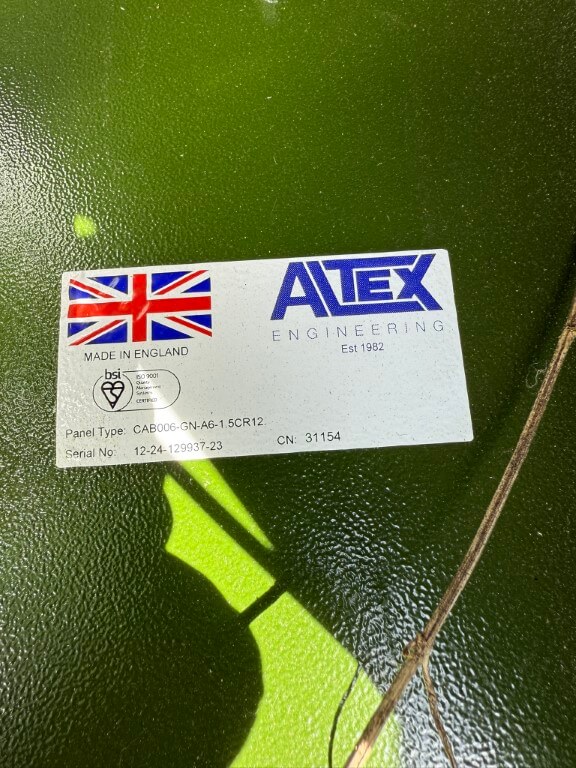
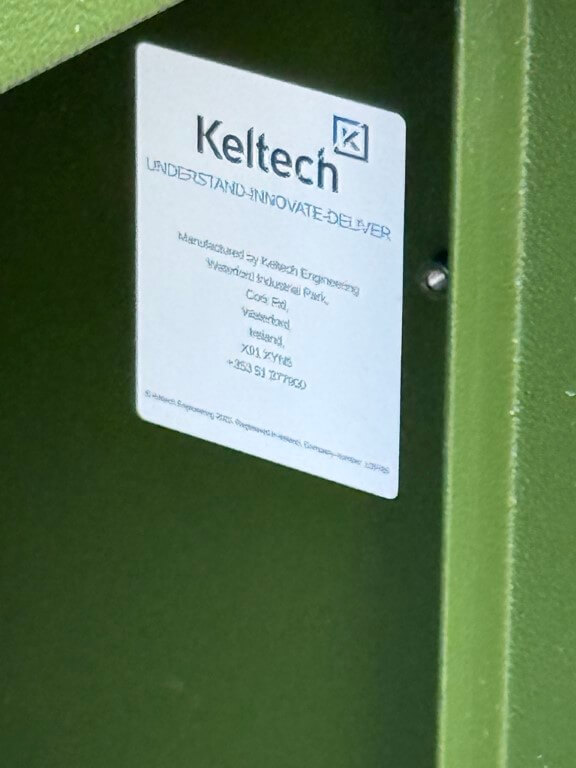
LINK to HellemannTyton Broadband Equipment
CityFibre’s infrastructure civil works in the town and surrounding districts are being undertaken by Granemore Group .
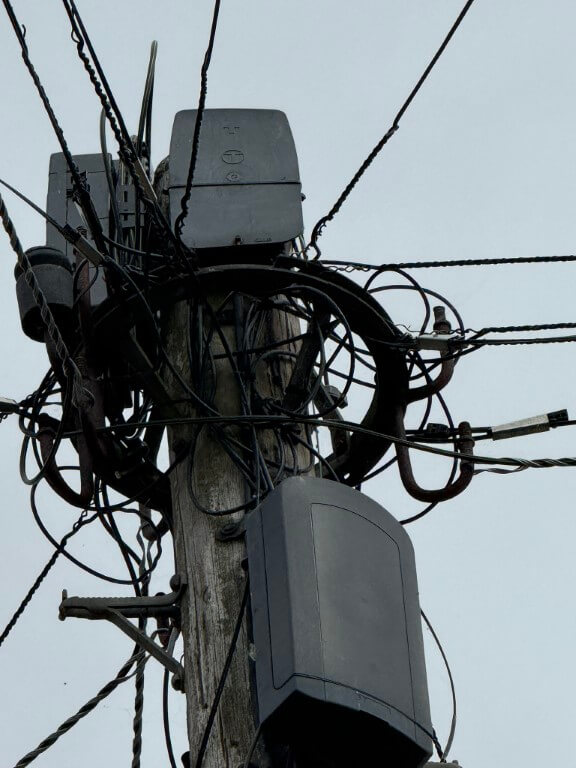
The above picture shows the evolution of communications from PO/GPO bare copper wire suspended between insulators then British Telecom multicore drop wires and now three fibre optic cable company connection points (BT, Netomnia & Cityfibre).
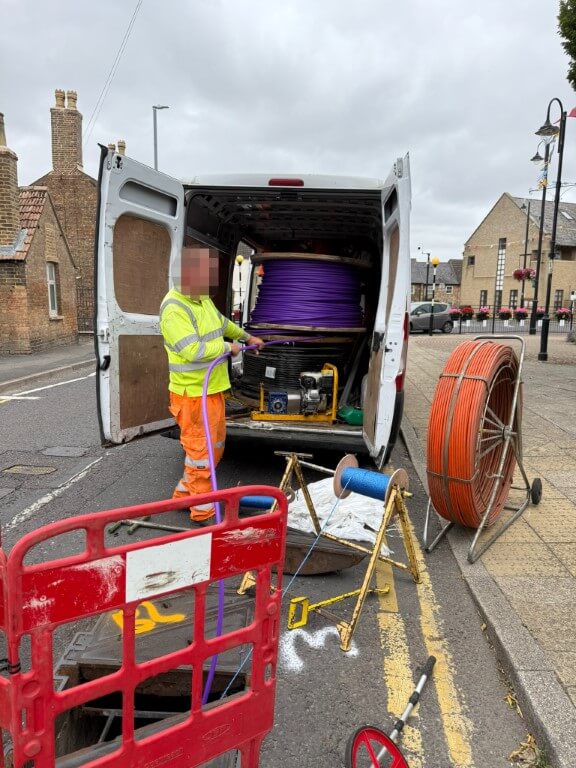
Spine fibre large single bore ducting being installed by sub contractors.
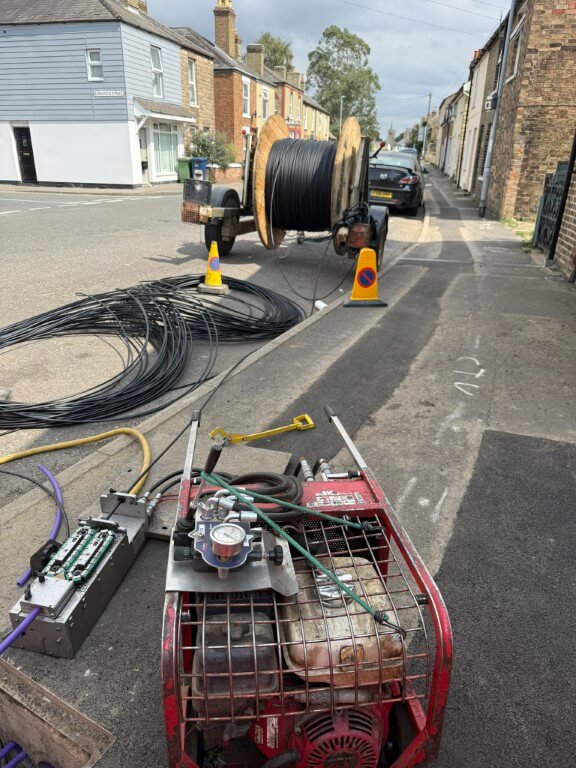
432 Core fibre optic cable being blown into a spine duct using a Fremco Miniflow.
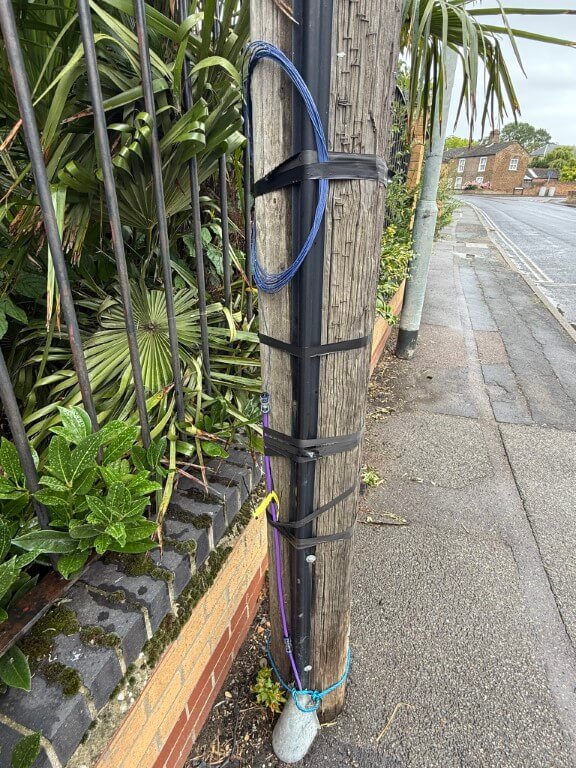
Quite a few poles around the town have the fibre duct in position ready to take the fibre optic cable to the top of the pole to enable Cityfibre customer connections.
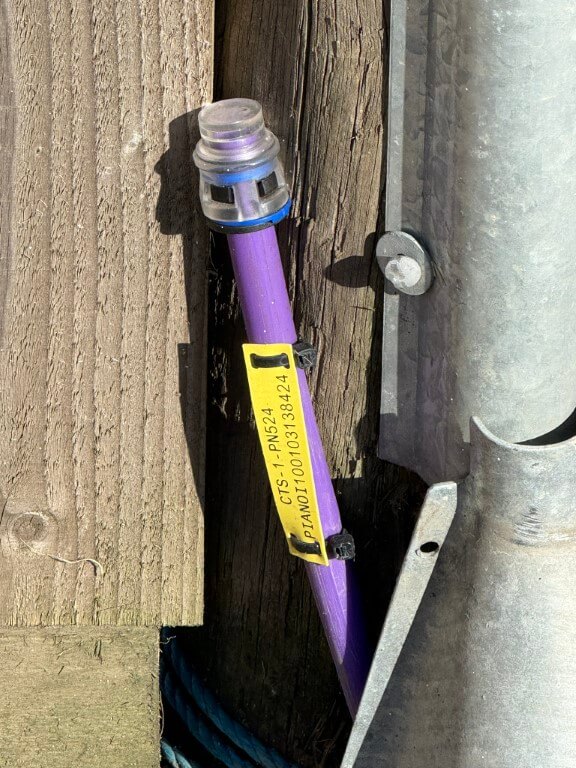
4 core fibre blown in from the local Primary Node ready for the next team to splice this to an Aerial Secondary Node at the top of the pole.
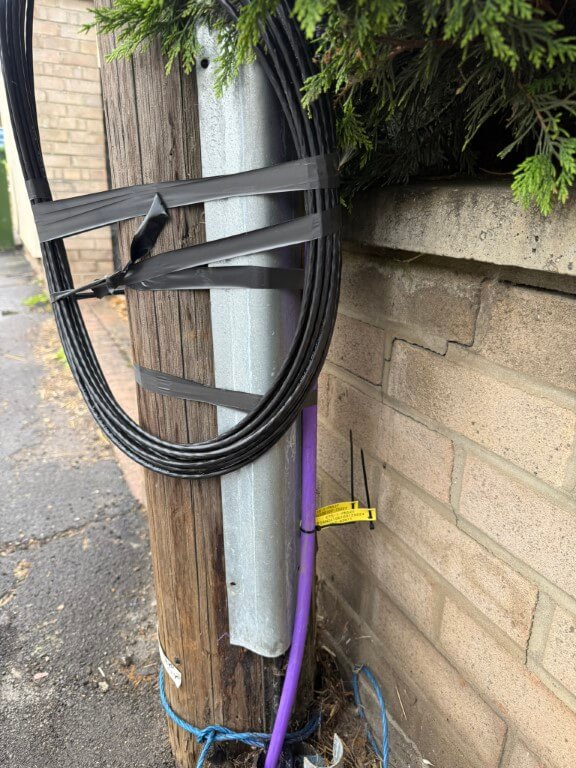
48 core fibre blown in from the local Primary Node ready for the next team to splice this to Aerial Secondary Nodes at the top of this pole and also to aerial span over to adjacent poles for their pole top connection points.
Areas in Chatteris, such as parts of the The Elms, Windsor Close and Green Park, BT used the ‘direct buried’ BT cable method cable, (this method can be identified by the images below), however, as CityFibre are installing ‘Toby’ boxes like Virgin Media did, this means that more choice will be available.
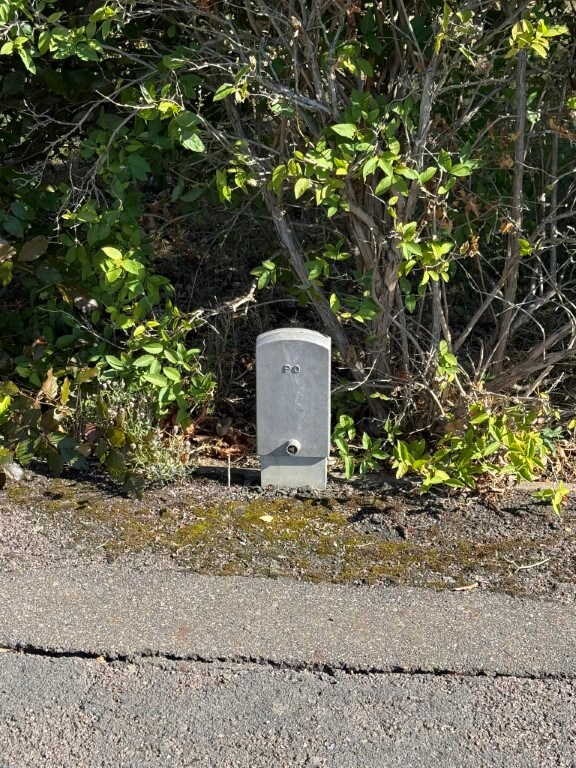
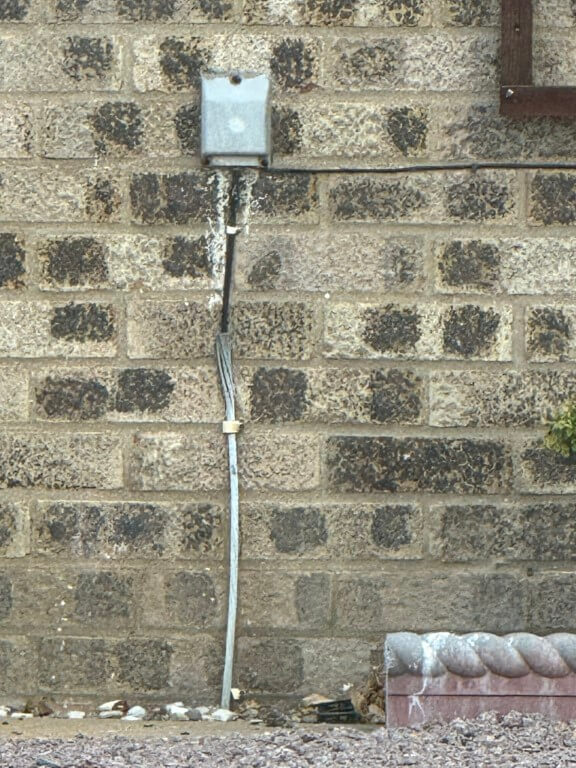
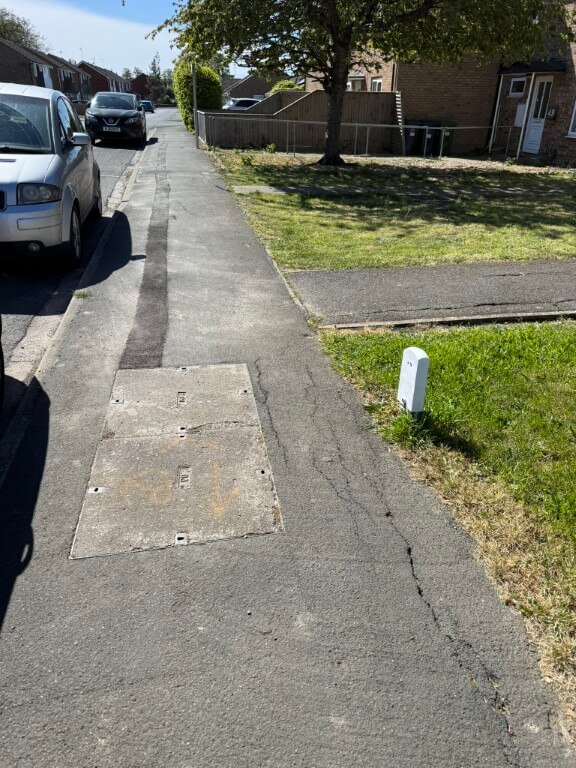
(14 August 2025 – Openreach planning application F/YE25/0602/PANR to install 2 x 10m fixed line broadband poles in The Elms, (Installed on the 30th August 2025))
The Cityfibre Network- The journey from Exchange to your Premises
Information obtained from Cloudconnex and expanded by the author.
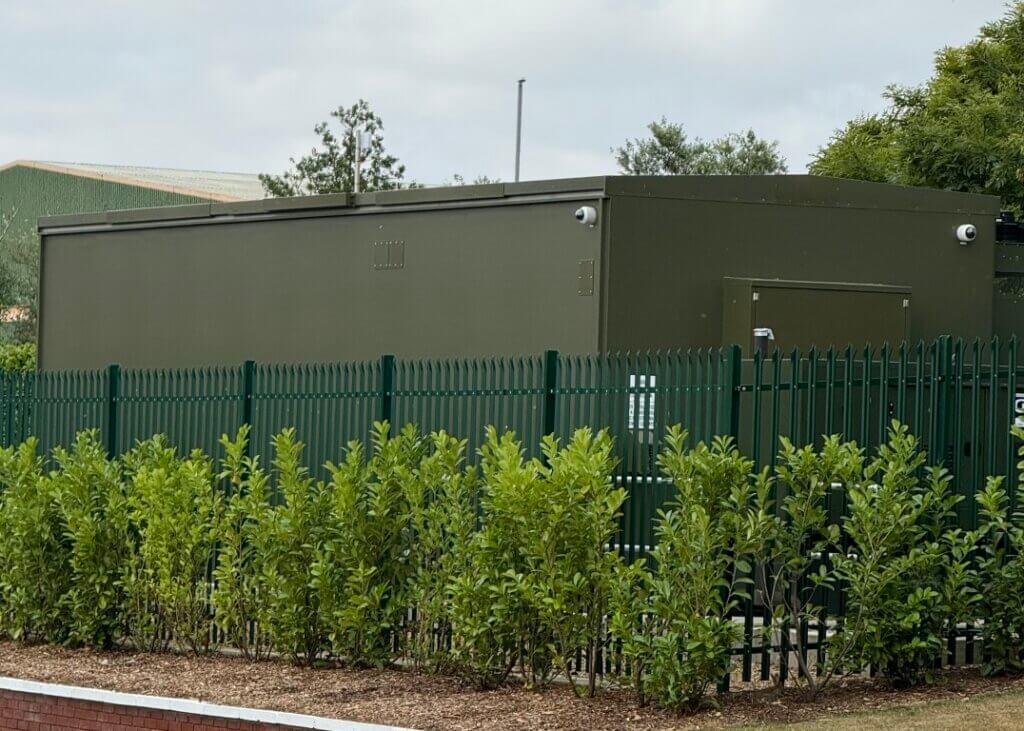
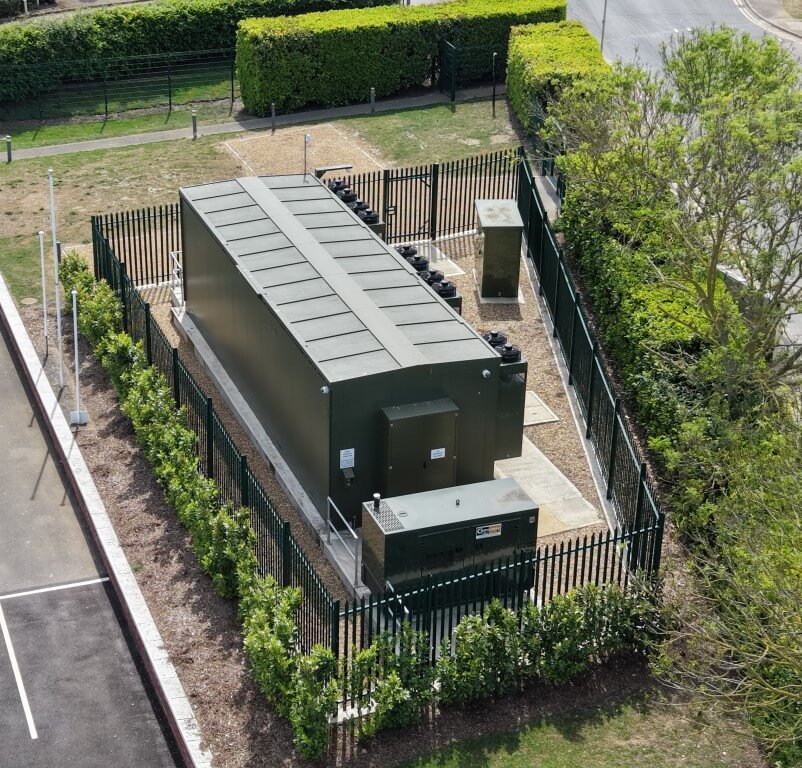
Fibre Exchanges (FExs)
Planning Ref – F/YR23/0656/F submitted 5 July 2023.
Large scale FEx constructed by Tyrone Fabrications.
- Tyrone Fabrications – What is a FEx
- Tyrone Fabrications – Fibre exchanges at Tyrone Fabrications
- Tyrone Fabrications – Fibre exchange installation
- Google Earth LINK to above installation location
The CityFibre network is built upon a network of fibre exchanges with an optical budget of 15.75Km, sometimes referred to as FEx’s. Each CityFibre Exchange is around the size of a shipping container (13m x 3.7m x 3.5m. Weight:14 Tonnes), and each facility can serve up to 65,000 properties. Each FExs is aligned to Data Centre Tier 2/3 specifications and houses 12 equipment racks doubling as a micro-edge data centre, each FExs not only powers broadband services, it provides a point of interconnect for Cityfibre partners and can help them realise their edge computing ambitions by storing and processing data closer to their customers .
Each FExs can support up to 7KW AC per rack, with DC rectification available for more traditional telecommunications carriers. In the event of a power outage, supply is automatically switched to A+B uninterruptible power supplies, and a Crievemore diesel standby generator, capable of running the entire site at full load.
Resilience is at the heart of the CityFibre network and as a result each exchange is served by 2 physically diverse backhaul fibres, complementing the ring-based topology used for the core infrastructure build.
Chatteris is part of the Cambridgeshire ring, interconnecting with established fibre exchanges in March and Peterborough.
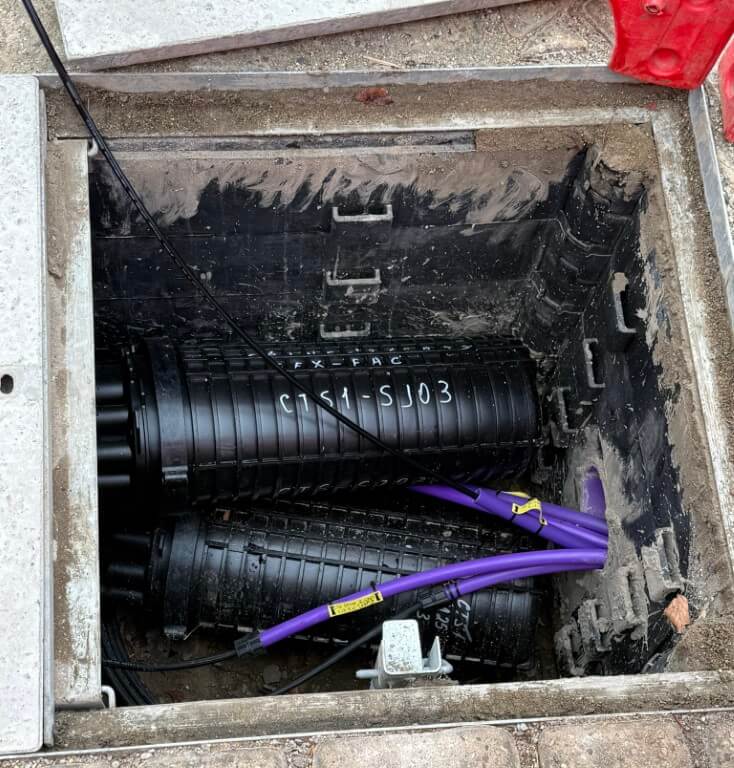
Fibres are ‘blown’ through core/feeder tubes originating at the FExs, in Chatteris 6 x 432 core fibres form the main spines to areas of this and other local towns.
Each spine cable passes through Secondary Joints as pictures above, these are the breakout points to Primary Nodes or Aerial Secondary Nodes if remote from Primary Nodes.
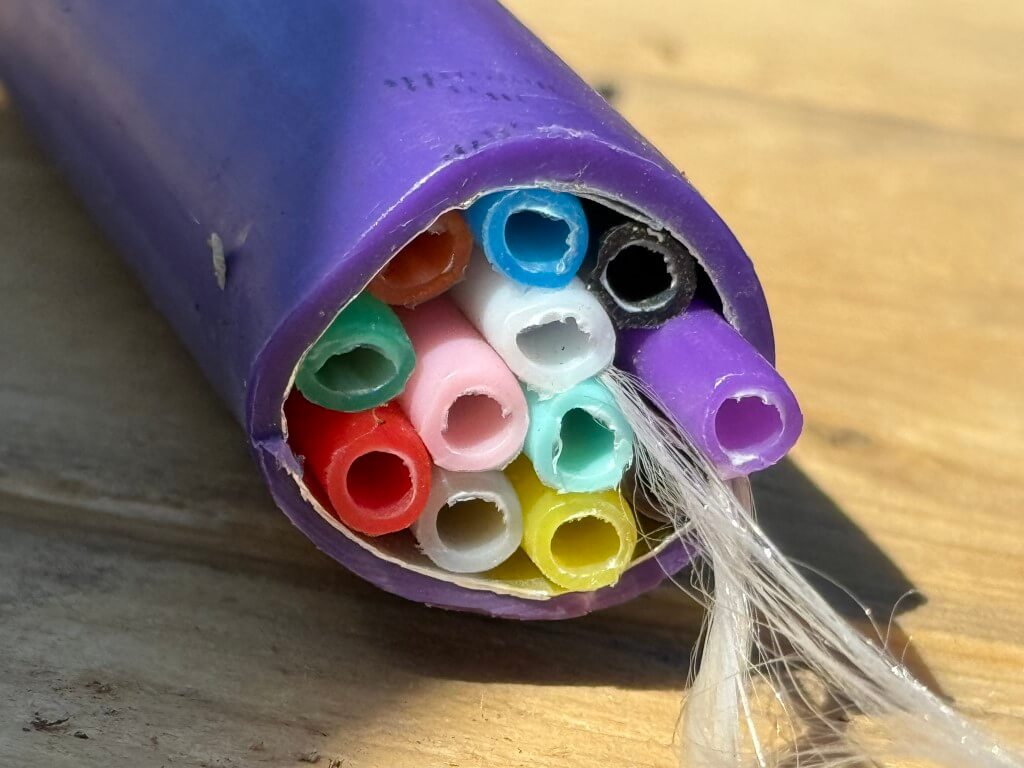
12 microtubes within cable sheath used for cabinet to toby interconnects.
Where joints are required, these are done in footway boxes with ‘through joints’ for each tube, the whole joint pack is then wrapped in a sealing jacket:
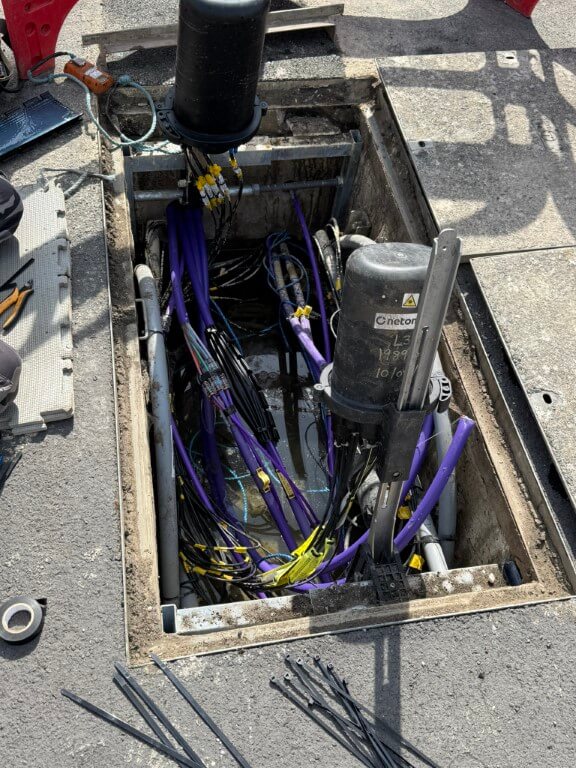
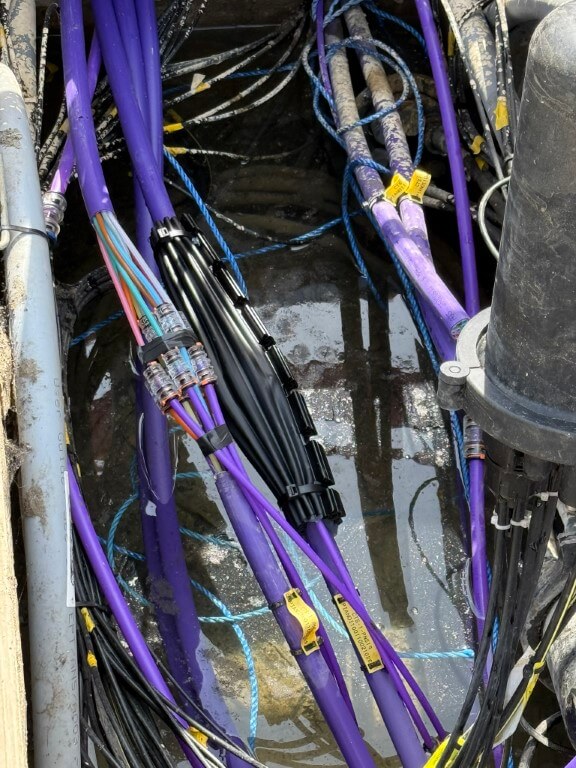
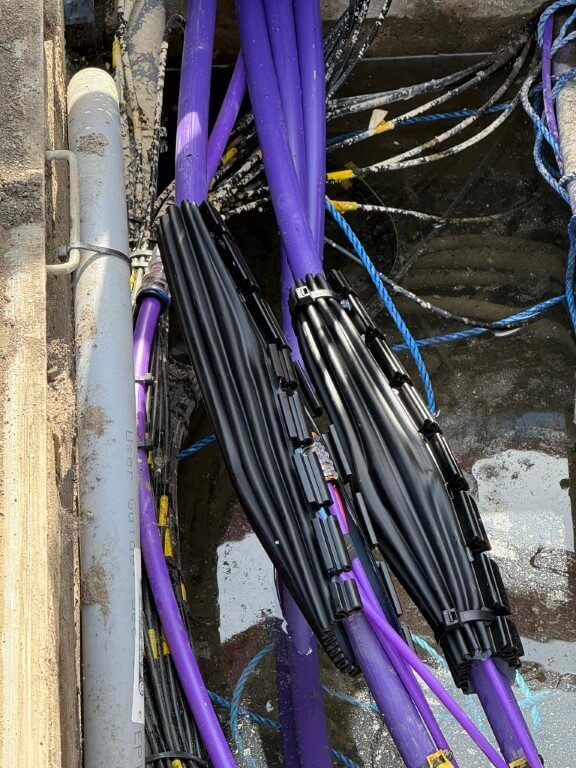
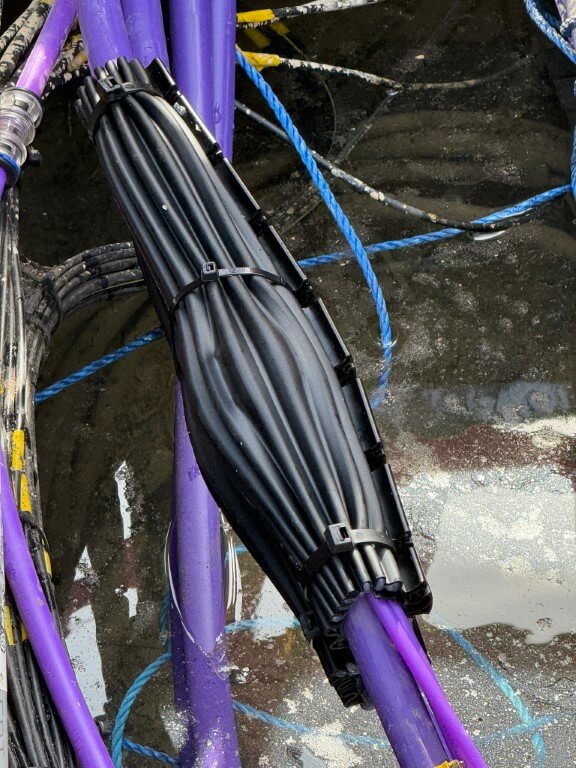
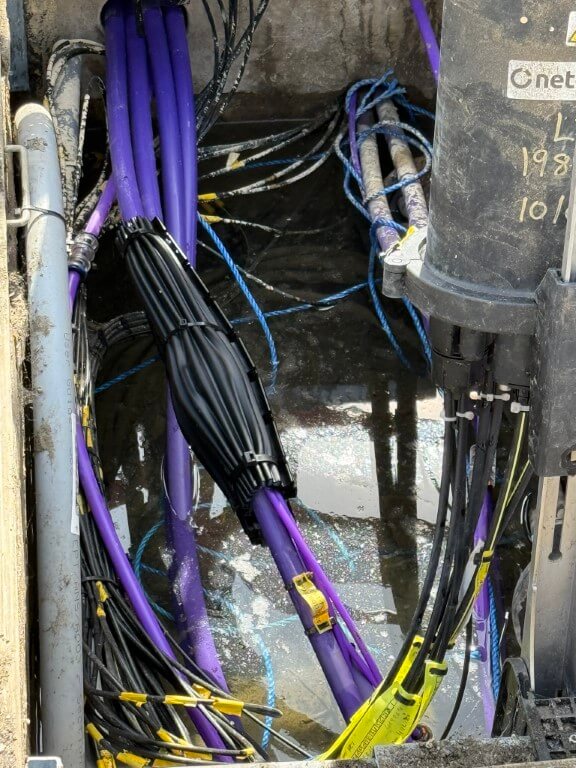
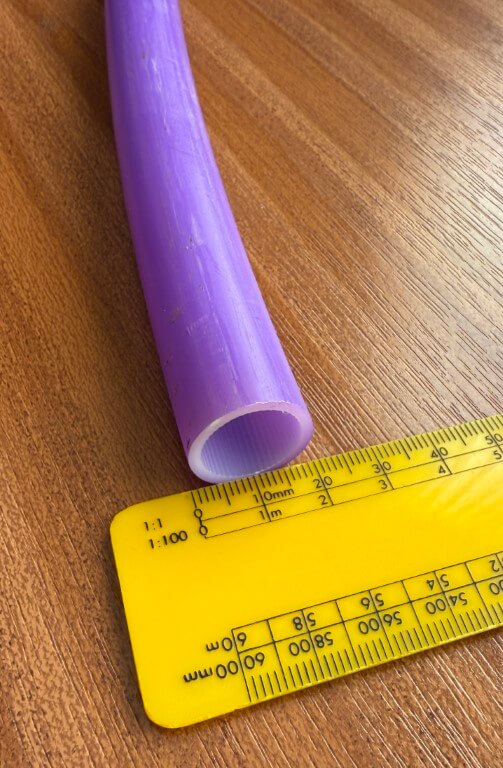
The same team which wrapped the microjoints also resin sealed the duct entries into the street cabinets using a kit similar to this:
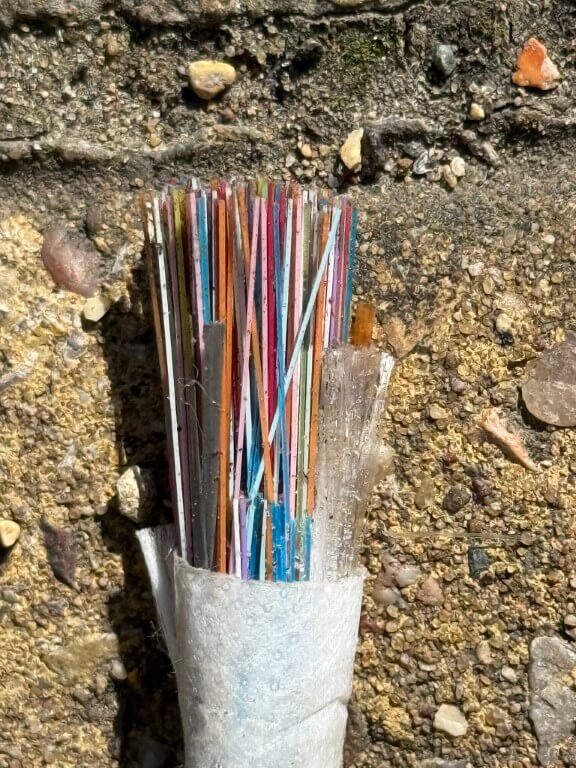
The 432 fibre Spine cable is blown through a larger bore duct.
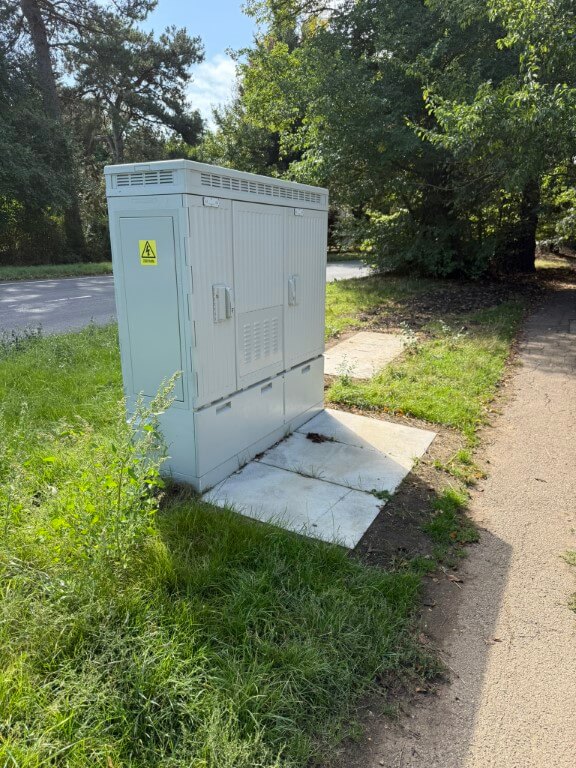
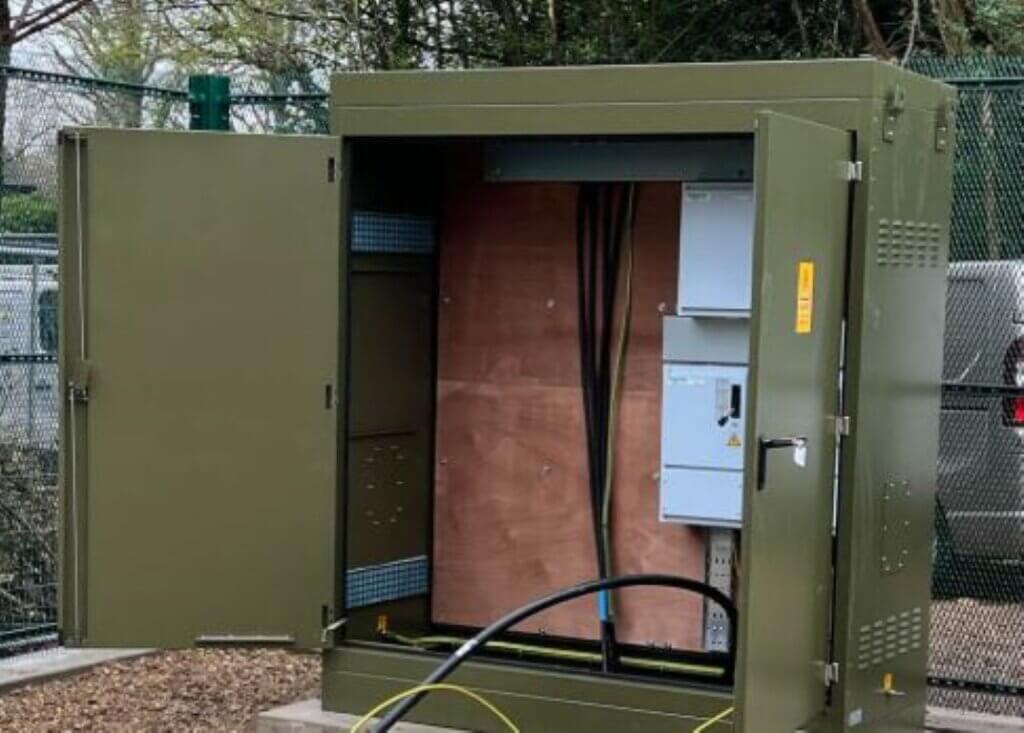
Warboys Fibre Active Cabinet (FAC) fed from the Chatteris FExs and supplies upto 3500 properties.
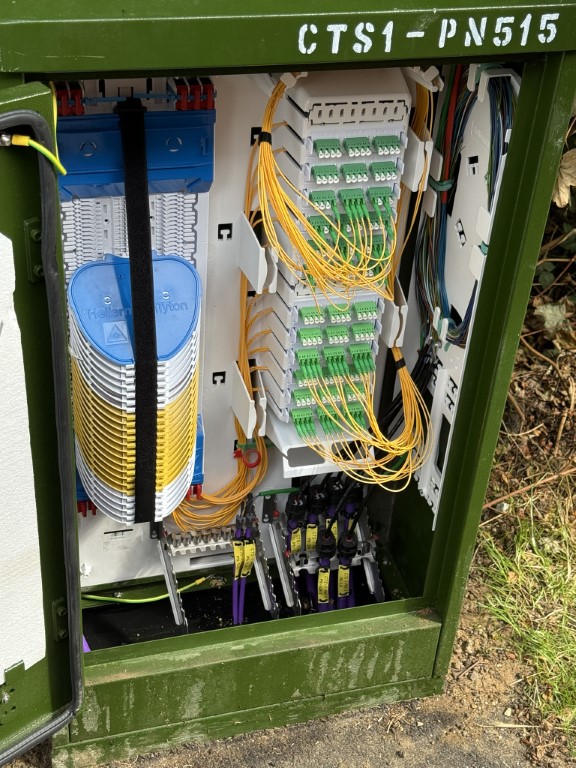
Primary Nodes
The FExs connects Full Fibre optical cables to the Primary Nodes via Secondary Joints. These are arranged in groups of 480 properties and are either hidden away underground or above ground in street cabinets, inside the cabinet are 1:4 splitters.
The Primary Nodes are connected as rungs in a ladder configuration to improve system resilience.
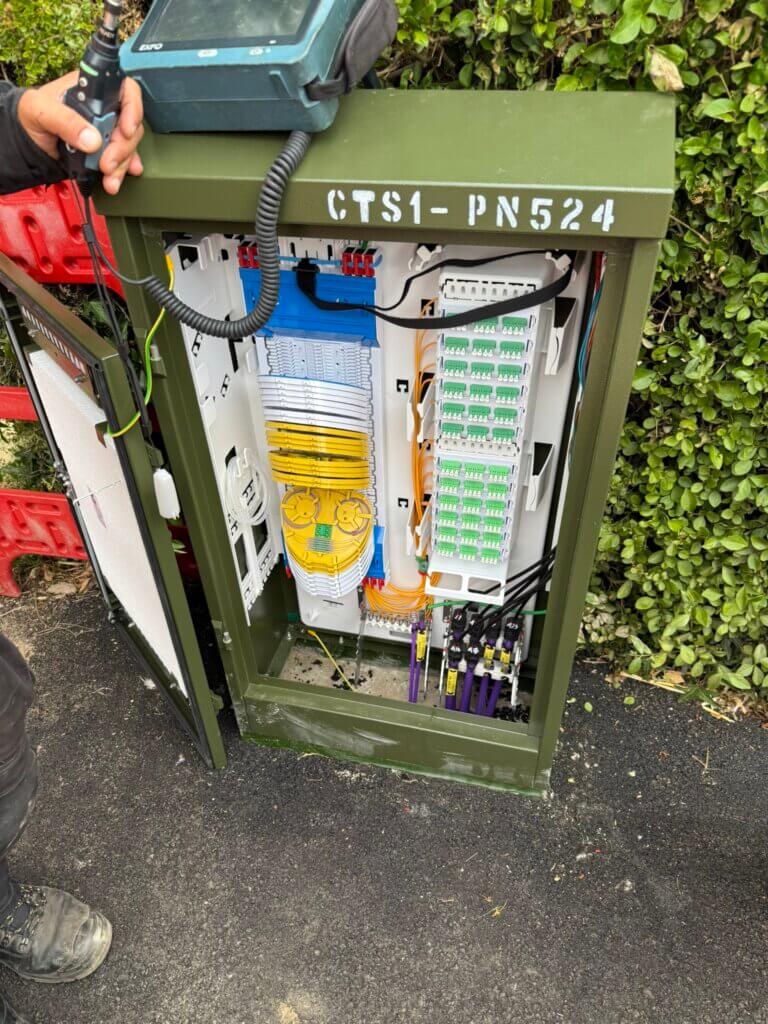
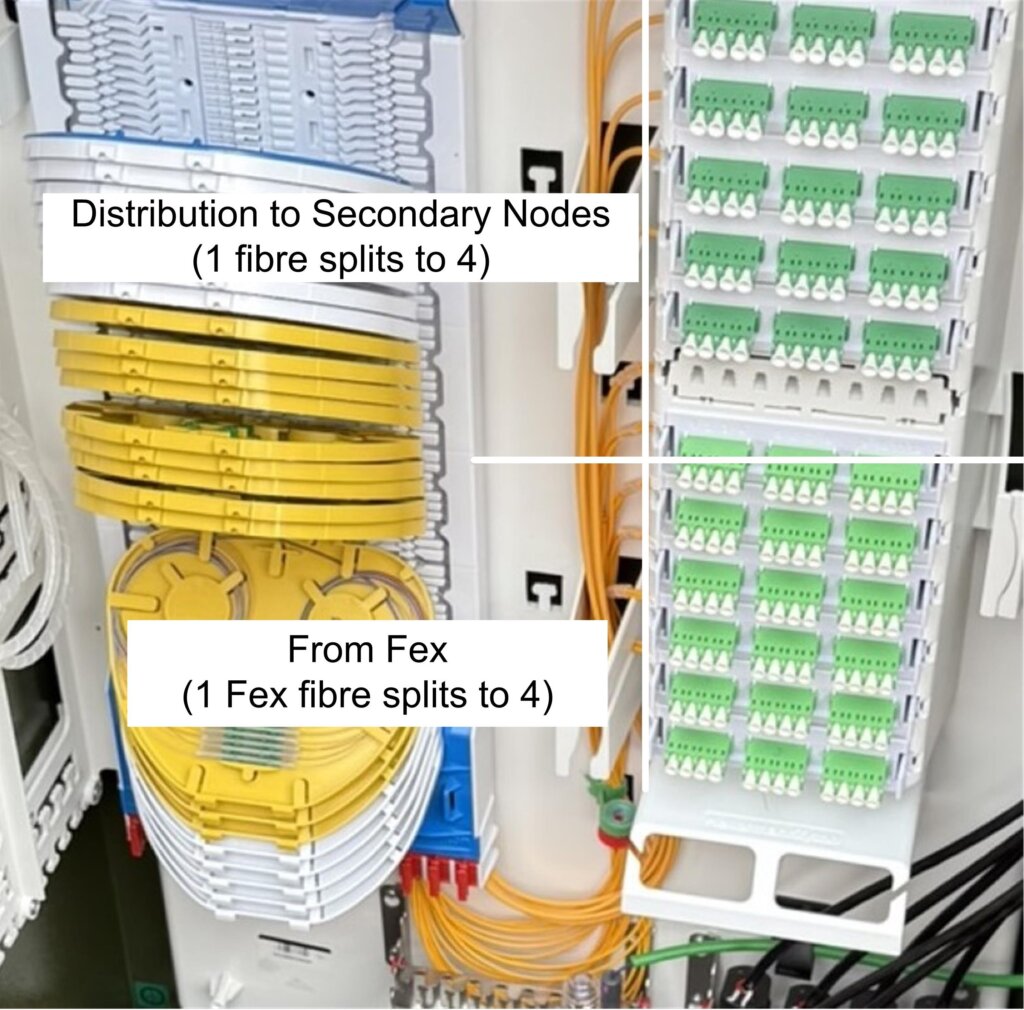
Fibre side contractor is:

Secondary Nodes
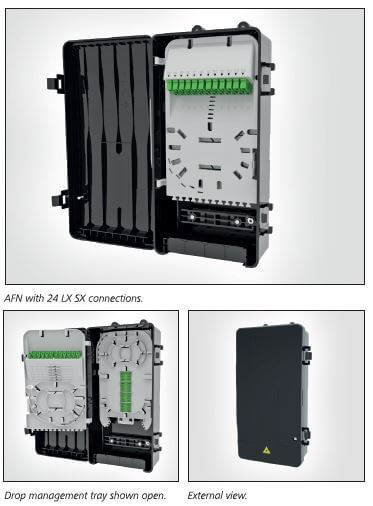
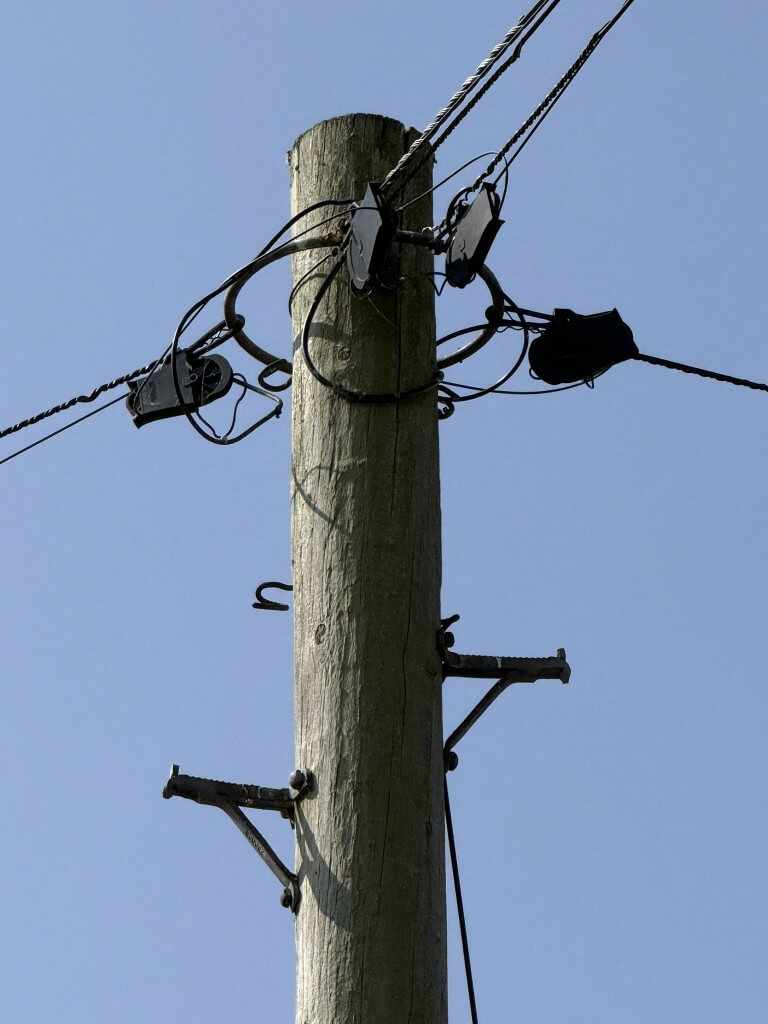
Secondary nodes are found in the form of street cabinets and host six 1:8 splitters enabling 64 connection capacity, equipment mounted on the top of an existing aerial pole, (Aerial Secondary Node – (ASN)) or within Footway Boxes.
Secondary nodes bring the connection from the Primary Node to the street on which your premises is located.
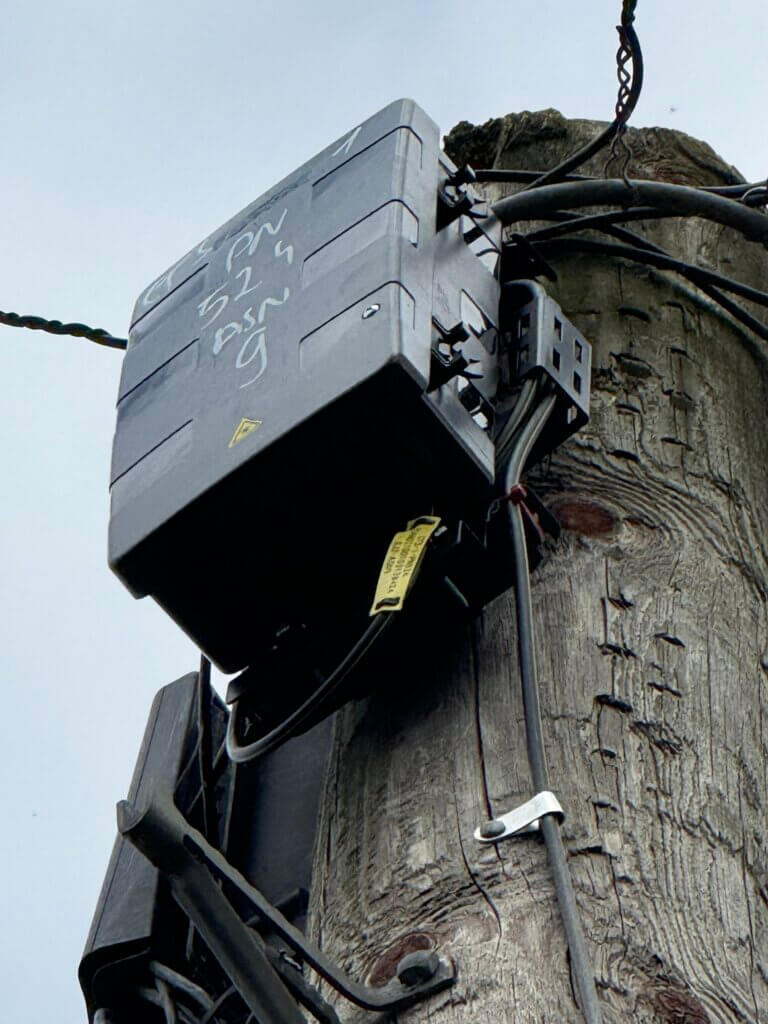
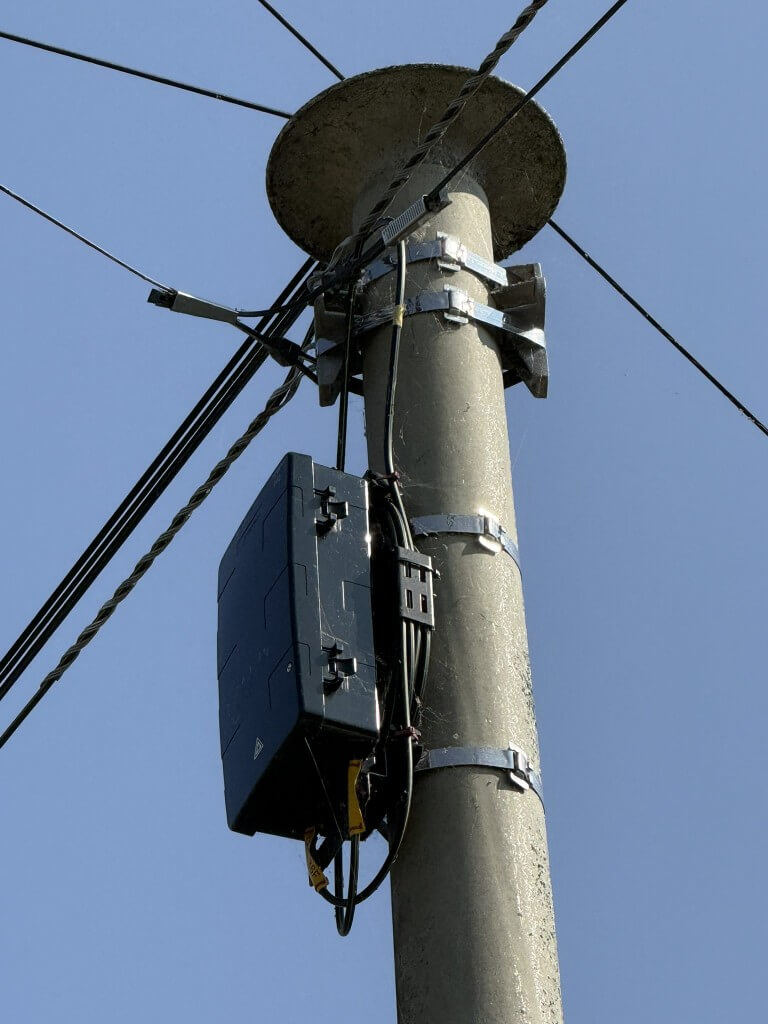
Within the ASN a single fibre is spliced to an internal optical splitter giving 8 outputs (1:8), therefore, three fibres have been spliced in the above ASN to give 24 customer connections.
The above ASN example connects to the Primary Node directly, other pole mounted ASN’s have two connections, one In and the other Out to the next pole mounted ASN, in London Road for example 5 pole ASN’s are fed from the Primary Node using this method.
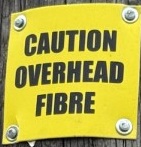
Depending of the ‘Cherry Picker’ crew fitting the ASN determines if the pole displays a warning sign, as I understand it, the sign is not mandated.
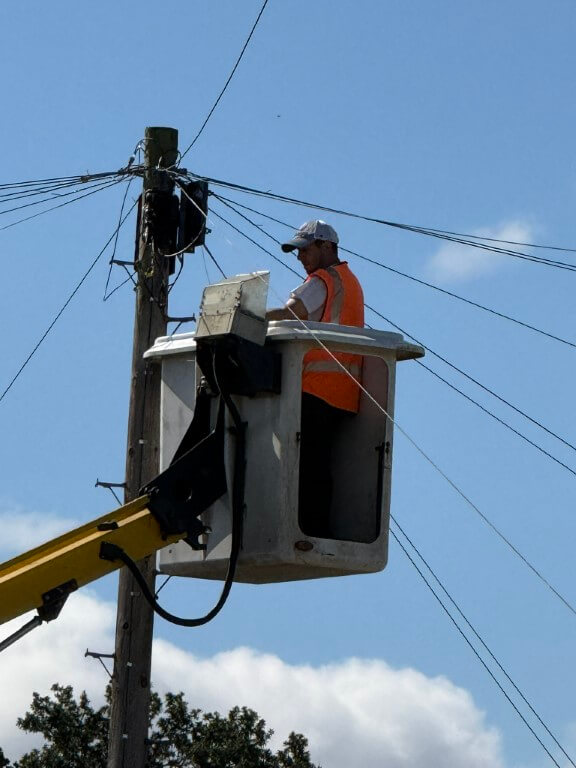
Cityfibre engineer installing an Aerial Secondary Node in Birch Close.
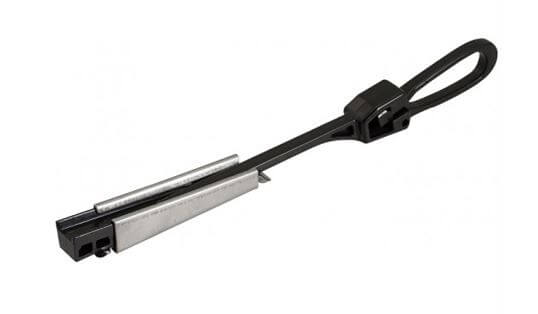
Connection from the pole to your property is via an overhead Dropwire, Cityfibre fibre dropwire is a round profile and uses a fibre drop clamp as below:
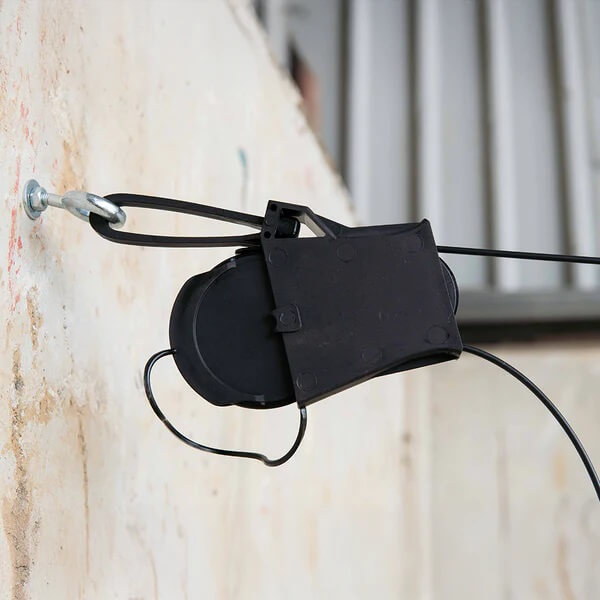
Netomnia use a flat profile fibre dropwire and therfore use a clamp reffered to as a ‘slippery fish’ :
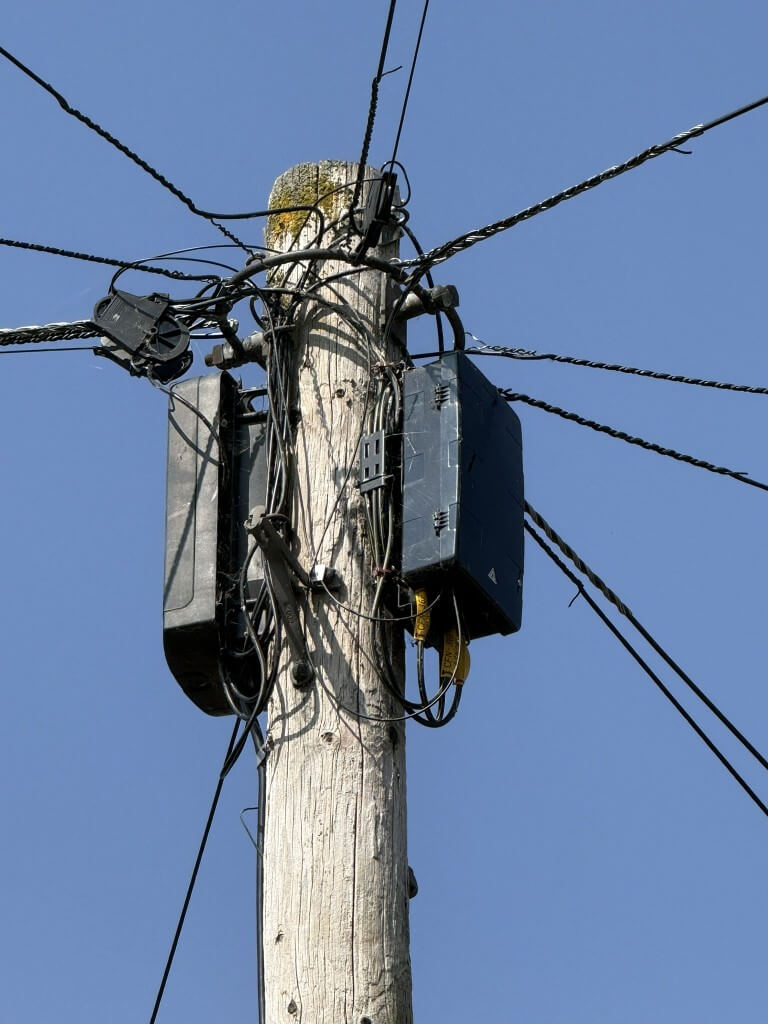
Above image showing Cityfibre ASN fibre connection going overhead to Chatteris customers property via transit poles due to the span distance from the originating pole.
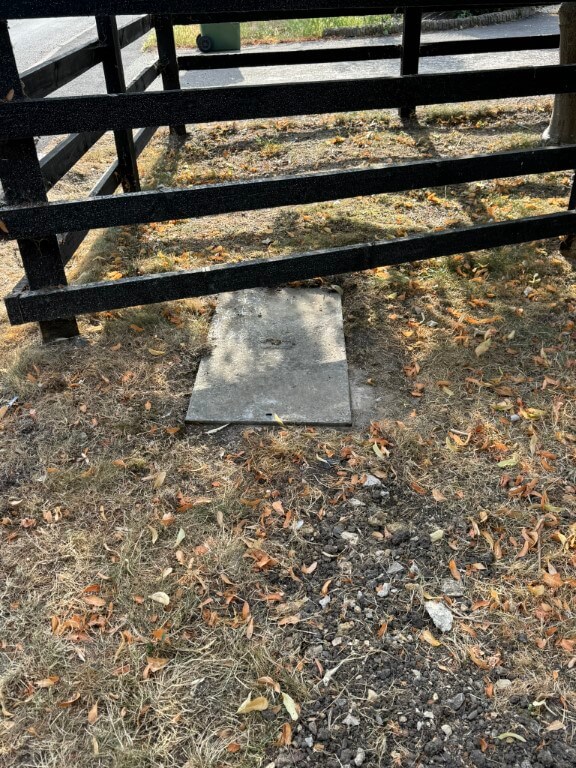
A Secondary Node closure within a chamber maybe used instead of a street cabinet in the following instances:
- Street ethestics
- Limited physical space
- Number of prospective subscribers warrants a smaller node
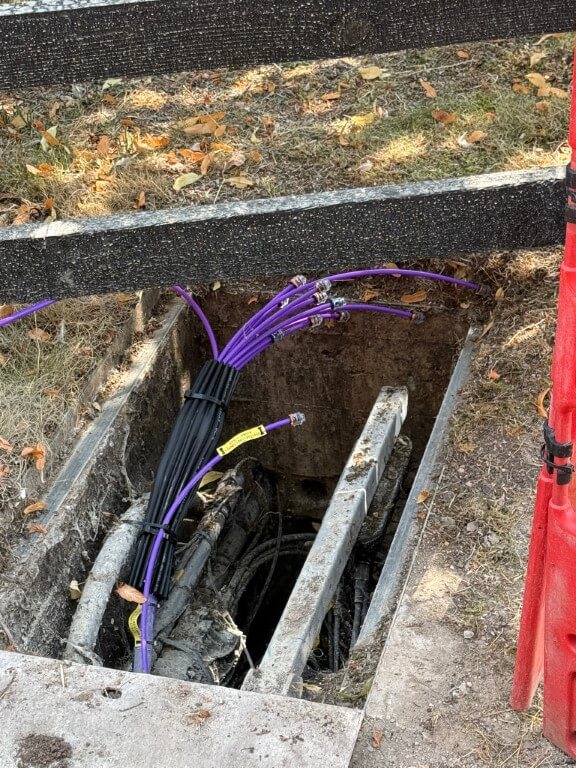
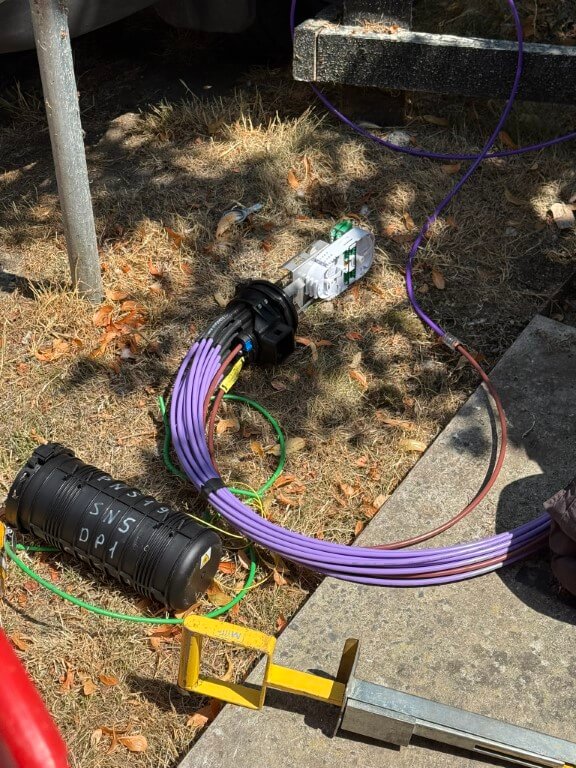
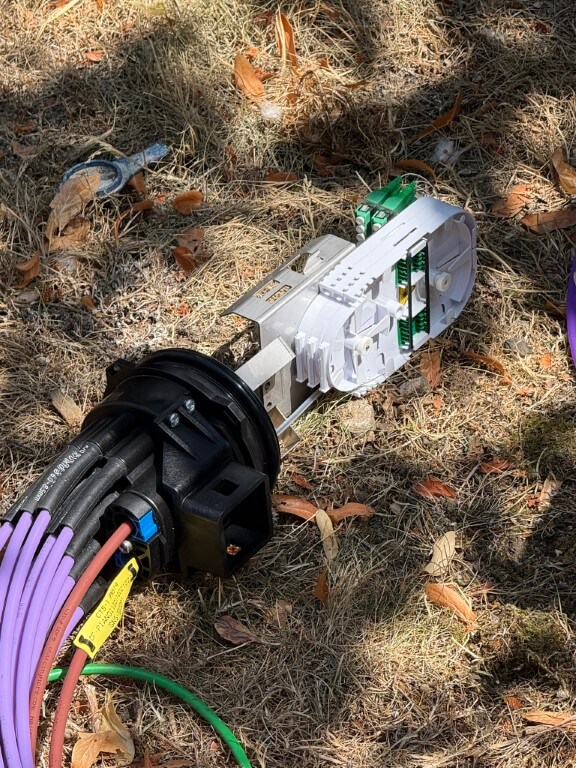
The images above show the chamber with the microducts ready for connection to the 16 Port FRBU Closure, the closure base centre duct is the 12 core blown fibre from the Primary Node.
Toby Box
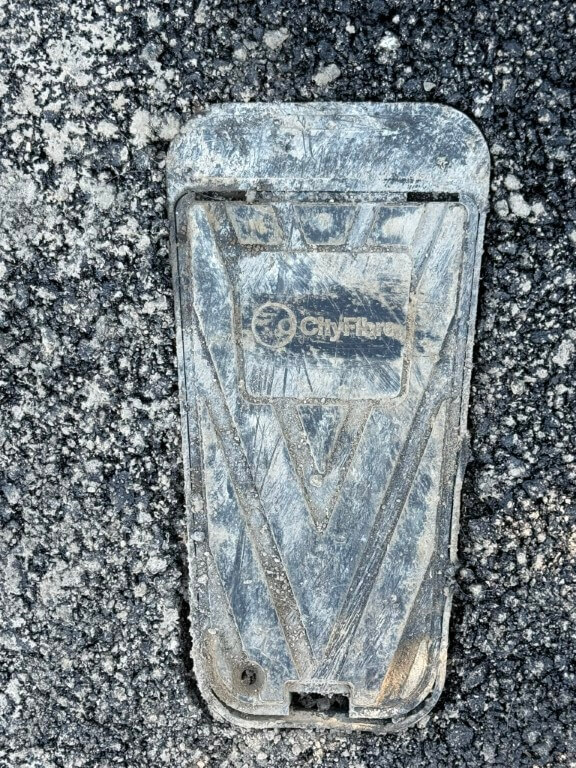
Toby boxes are found in the pavement near your premises, or on a nearby pole as a drop wire. Toby boxes bring the connection from the Secondary Node to outside of your premises. When a network is built, this is where the connection stops until the customer signs up to connect their premises into the network.
The significance of the ‘Toby’ is that Netomnia only provide a service using either or overhead cables from poles or using existing BT ducts to your house, this means houses which have no local poles or that have telephone cables which are ‘directly buried’ in the ground, can’t get a Netomina provided service from Youfibre.
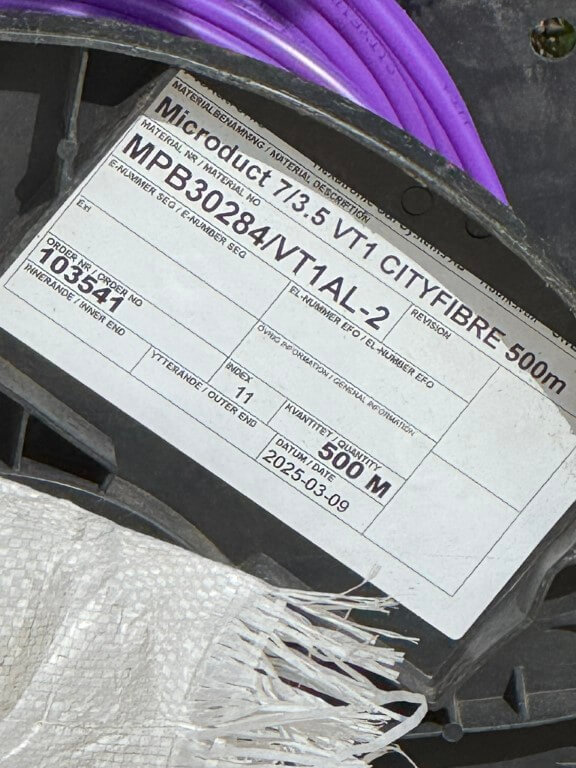
Fibre cable used from Primary Note to Aerial Secondary Node – Data Sheet
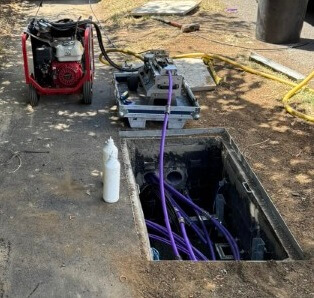
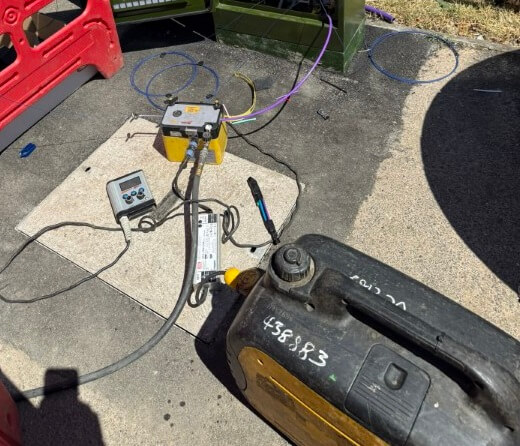
Fibre blowing equipment, the one on the left is blowing 432 core fibre whilst the one on the right is for smaller fibres.
Customers Termination Box (CTB)
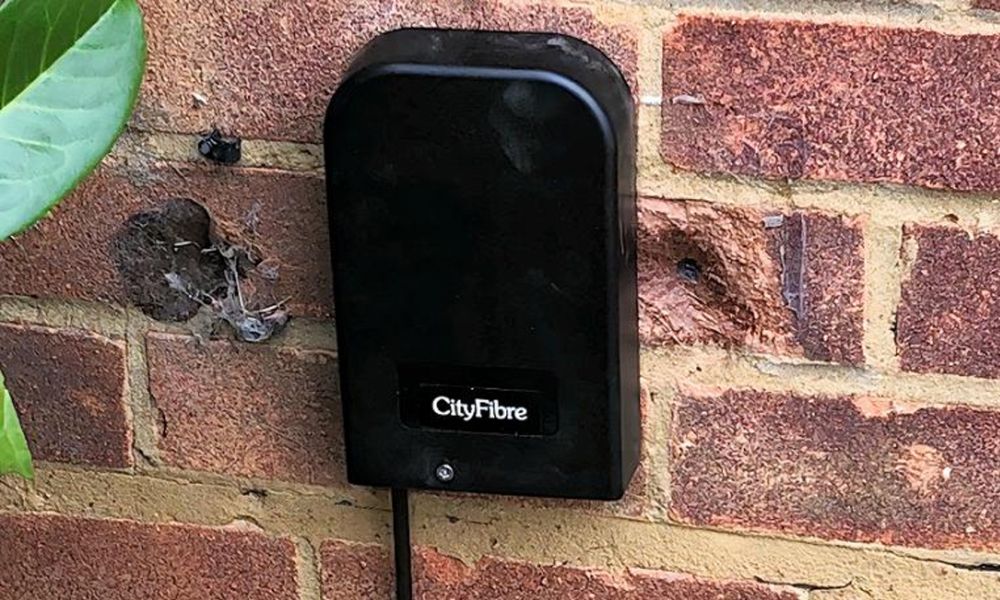
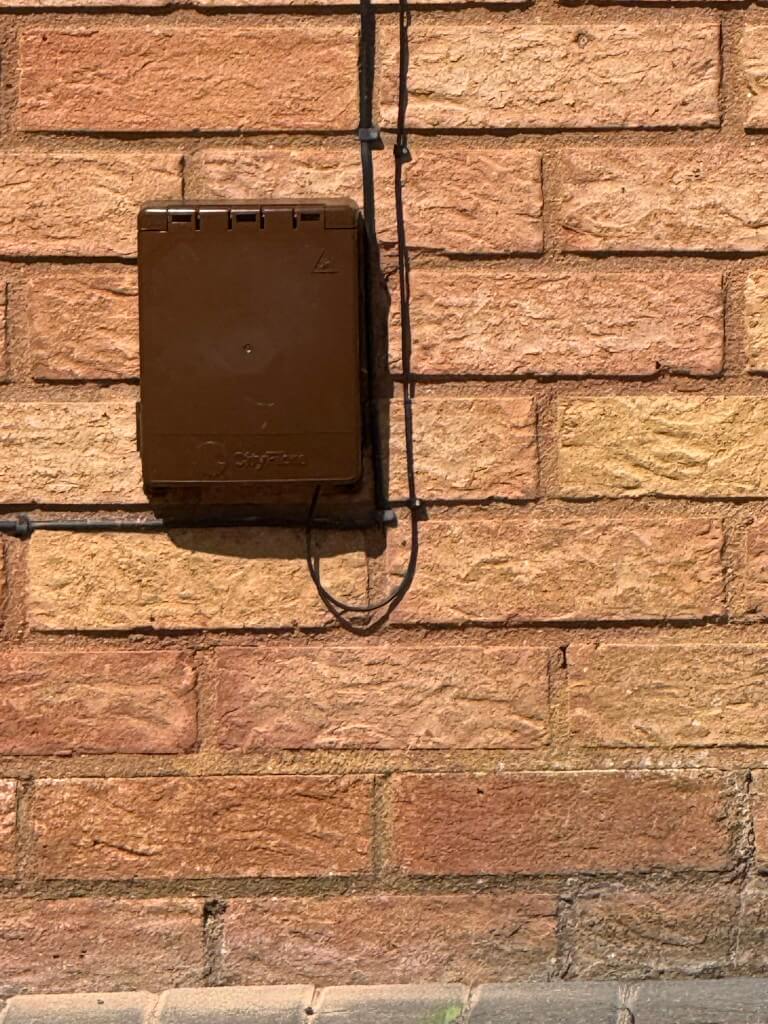
Connection is taken from the Toby Box in the pavement or via a dropwire from a local pole to a Customers Termination Box (CTB), on the outside of your premises. This is installed when you sign up to a CityFibre network provider. The CTB then connects via a Lead In Kit to an Optical Network Termination (ONT) box inside of your premises, which in turn connects into the router. This process brings fibre optic connectivity all the way into your premises. You will need 2 power sockets, 1 to power the ONT and 1 to power your router.
LINK to Cityfibre ONT information coutetsey of Alex at aa.net.uk
Cityfibre Training
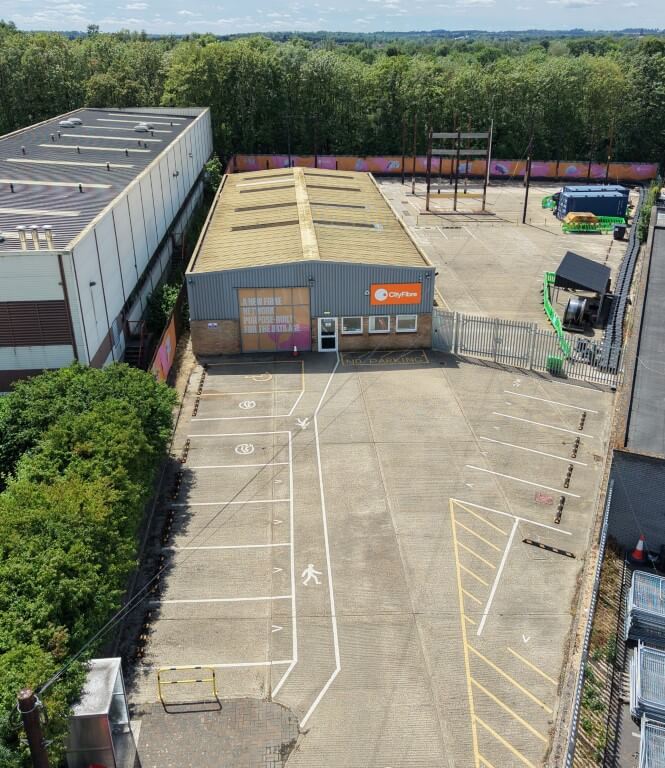
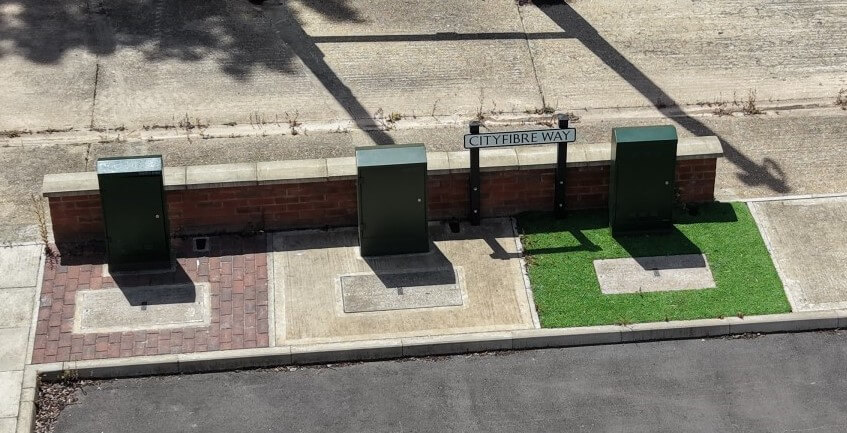
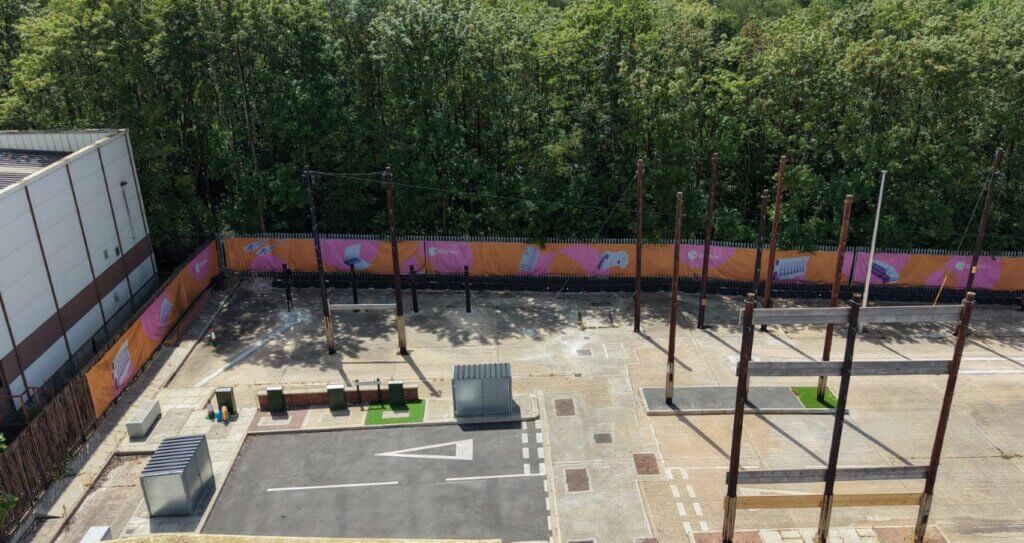
CityFibre operates a major National Training and Engineering Centre in Milton Keynes, serving as a hub for employee growth and technical development.
Topography
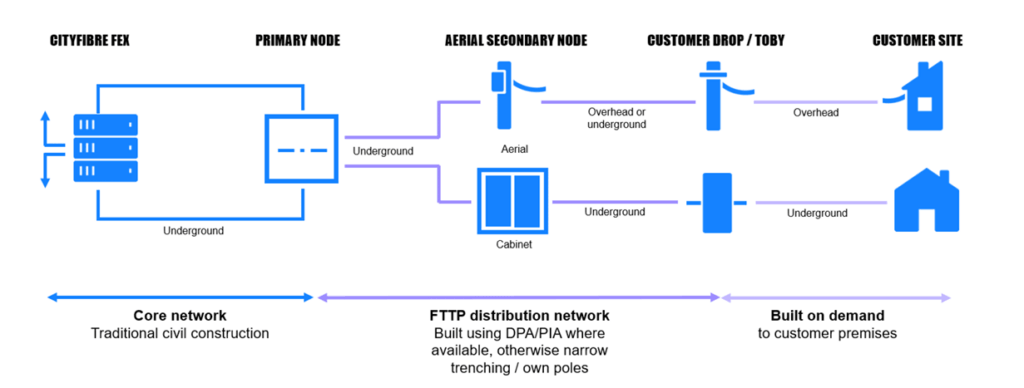
CityFibres overview diagram extracted from their Draft Resiliance Guidance document.
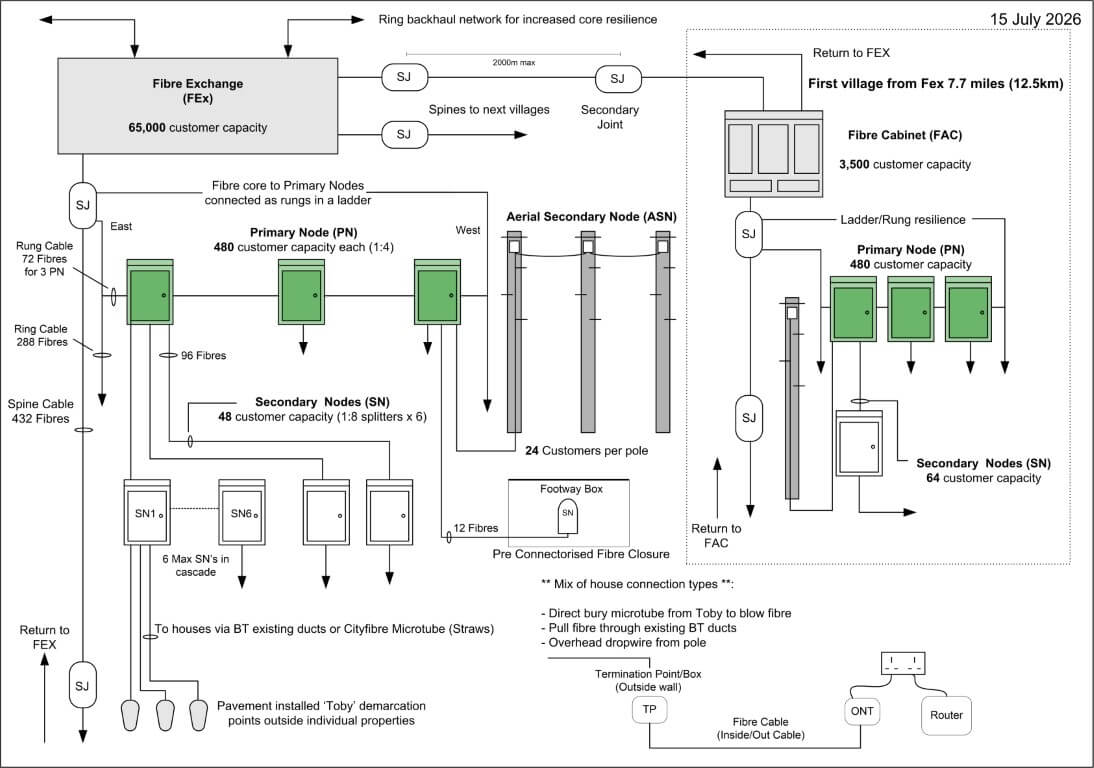
My overview interpretation of connectivity based on observation, referance to ‘Cityfibre Customer Engineering Manual‘ and QC Guide 2020 Architecture. Please feel free to contact me if I have made errors or need to add further information.
17 June 2025 Update
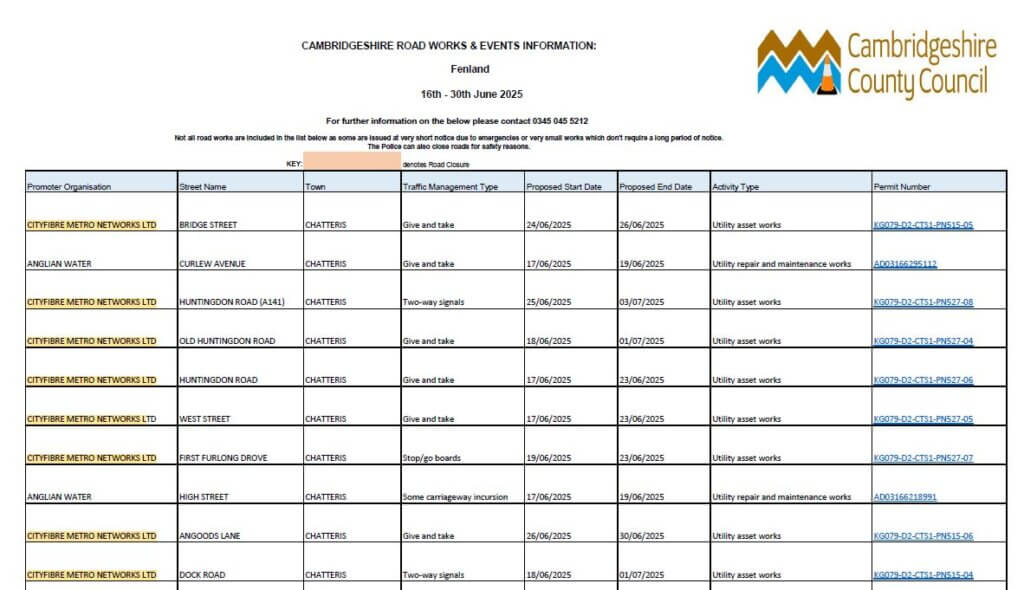
Example of works approvals used to track progress:
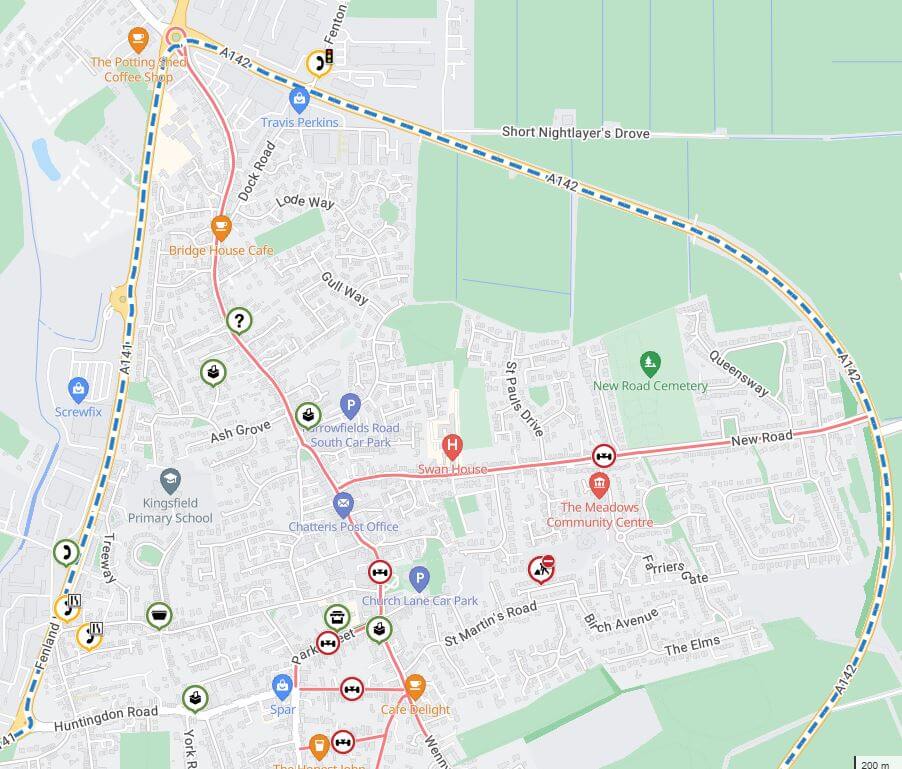
New duct and Cityfibre manholes have been installed along the A141 taking extending service from the Chatteris FEx to Warboys, Old Hurst, Woodhurst, Pidley, Somersham, Colne, Earith, Willingham, Doddington and Wimblington to name a few.
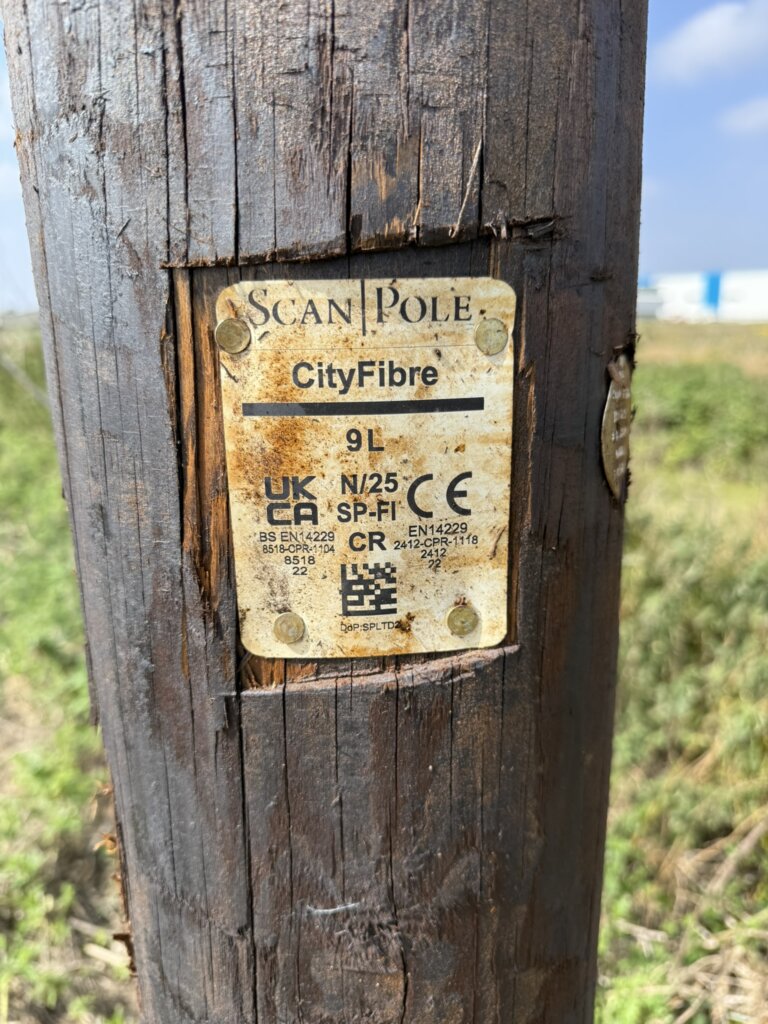
I noted a number of new poles have been installed by Cityfibre to take service connections to remote farms.
15 December 2025
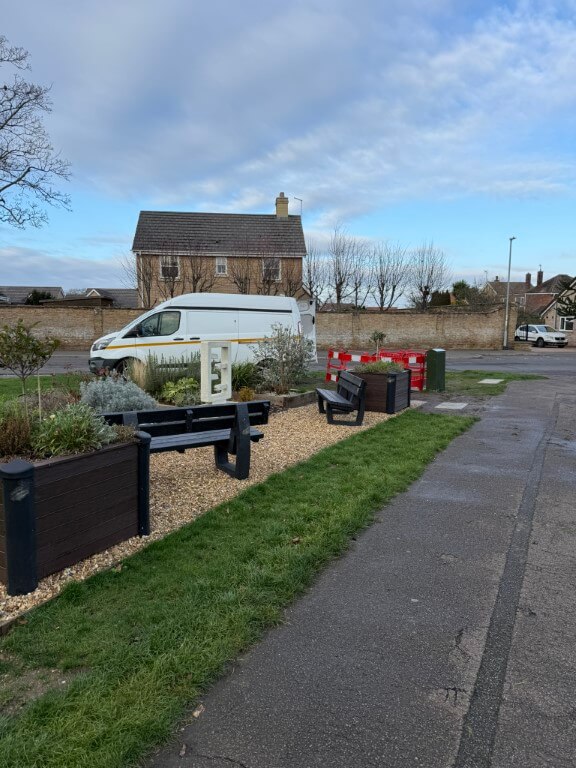
Engineer ‘end to end’ testing a 288 fibre cable which belongs directly to a customer.
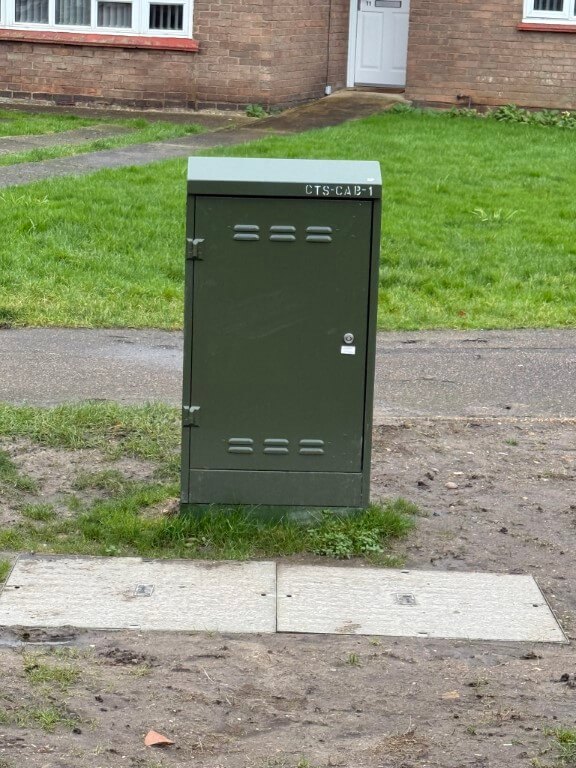
30 Jan 26 – Engineering testing works completed, cabinet identifier does not follow the normal Cityfibre broadband provision for cabinets, (possibly) confirming that it is a service for a customer who needs dedicated fibres, (5G mast?) or Openreach Interconnect to FEx?
24 March 26 – After a bit of a lull, infrastructure teams are back in the town, this was spotted outside my house.
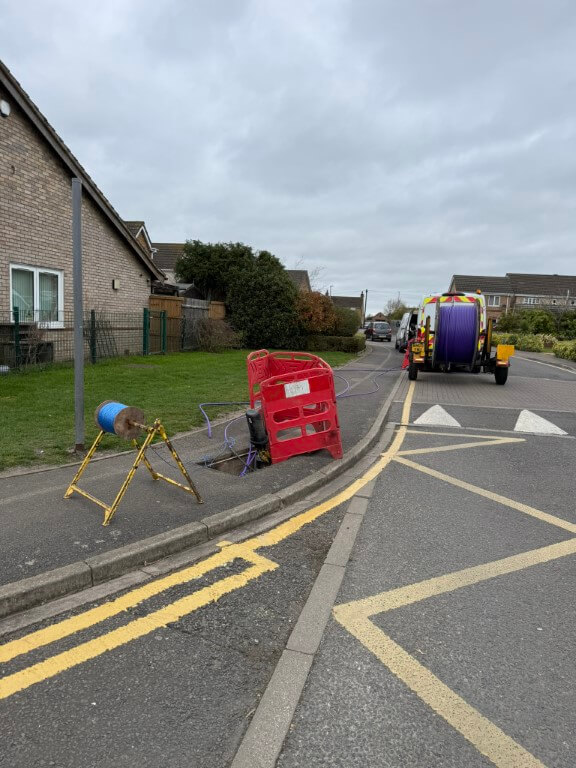
Cabinets Map
The Pin map shows the approximate position of street cabinets, hovering over each pin will show its location and cabinet number, the see images of the cabinet, click the green circular cross below the map:
- GREEN pins are Secondary Node locations;
- RED pins are Primary Node locations;
- BLACK pins are Spine Chambers;
- PINK CROSS Fibre Active Equipment.
NOTE – A Number of Secondary Nodes are within chambers and therefore there locations are unknown, for example PN519 has 3 Secondary Nodes in chambers currently with only SN3 known, SN9 & SN10 are not.
The speed of installation and quality of restoration is an absolute testament to the hard working lads doing the job, especially considering the heat we are having.
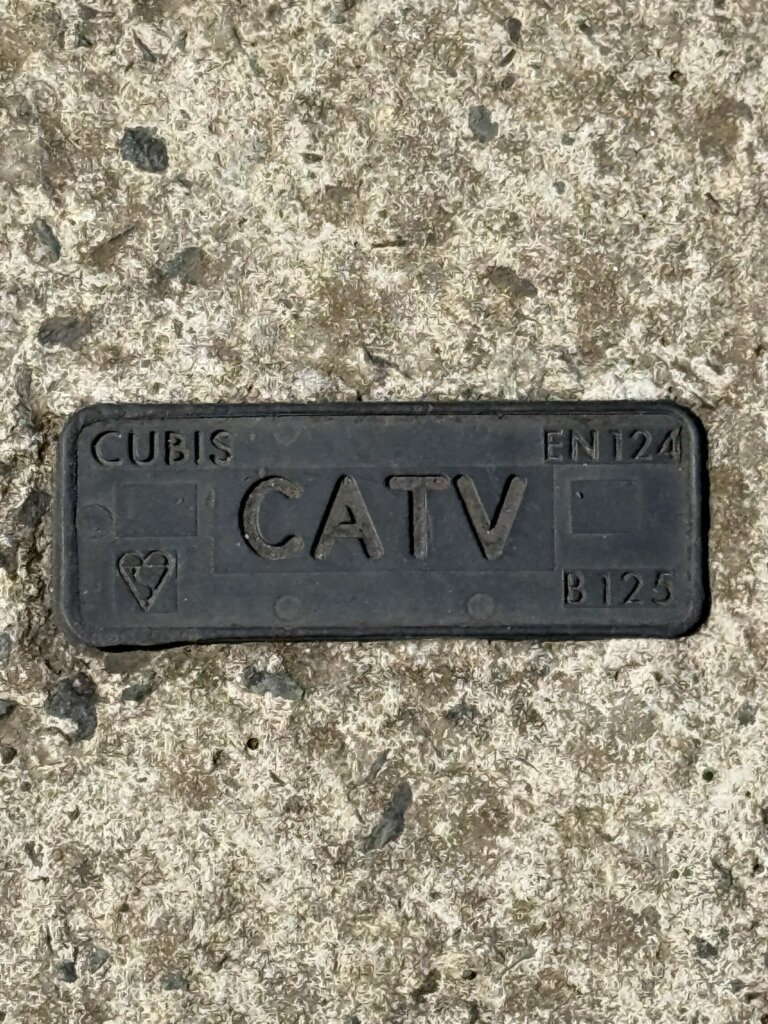
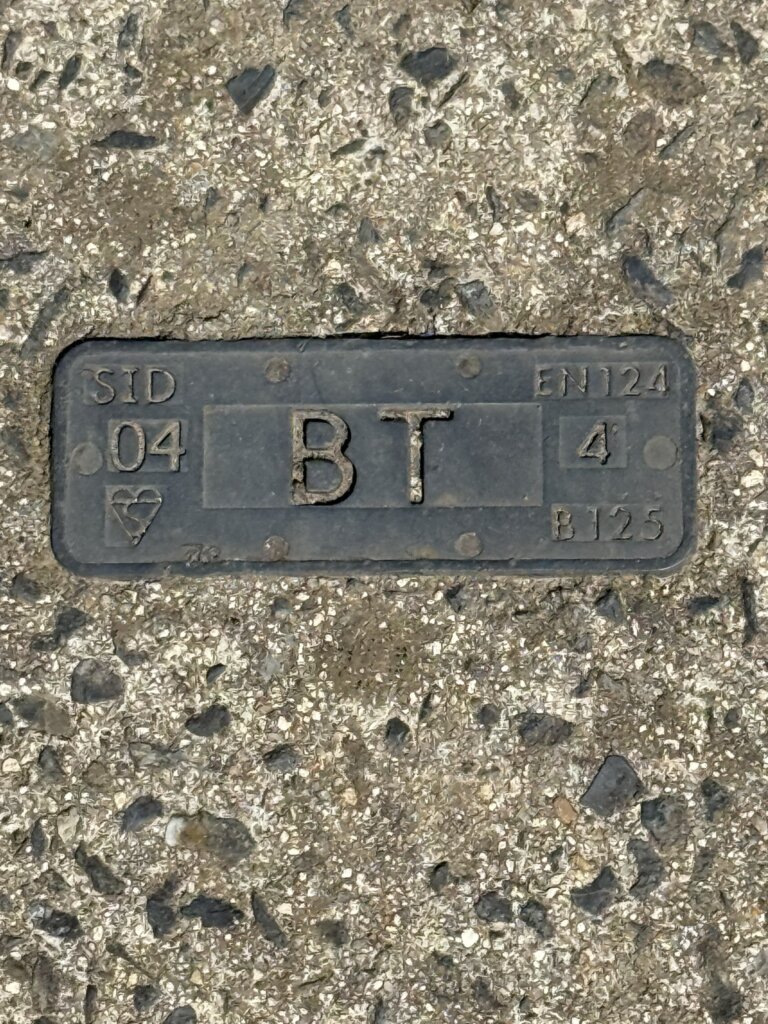
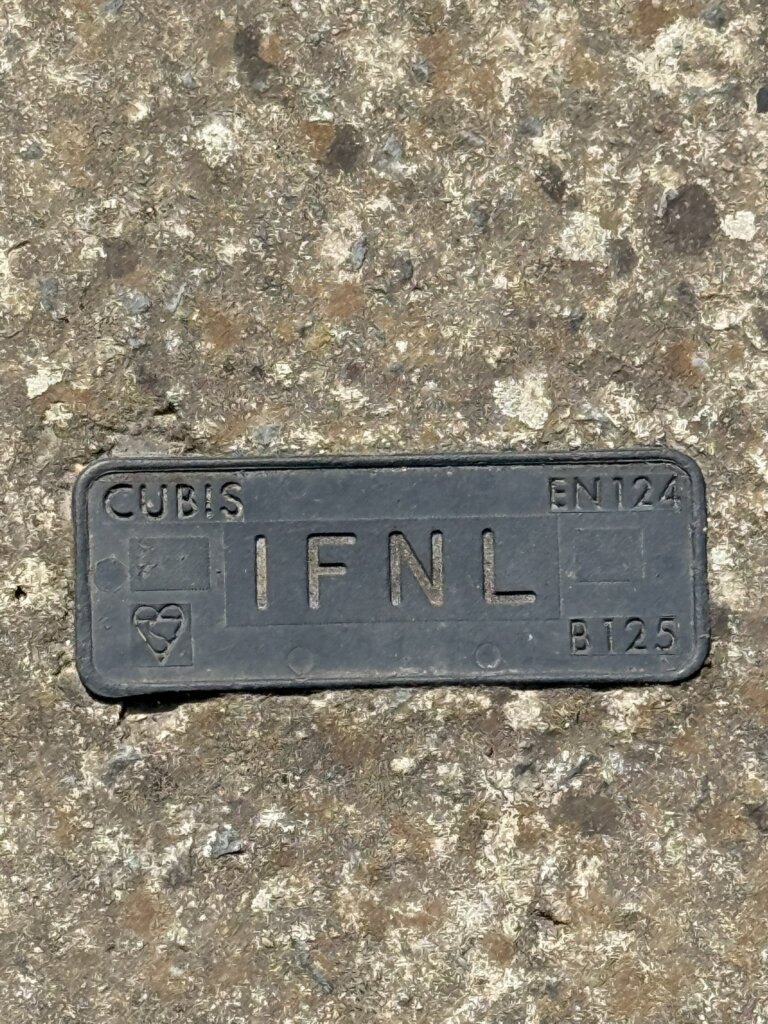
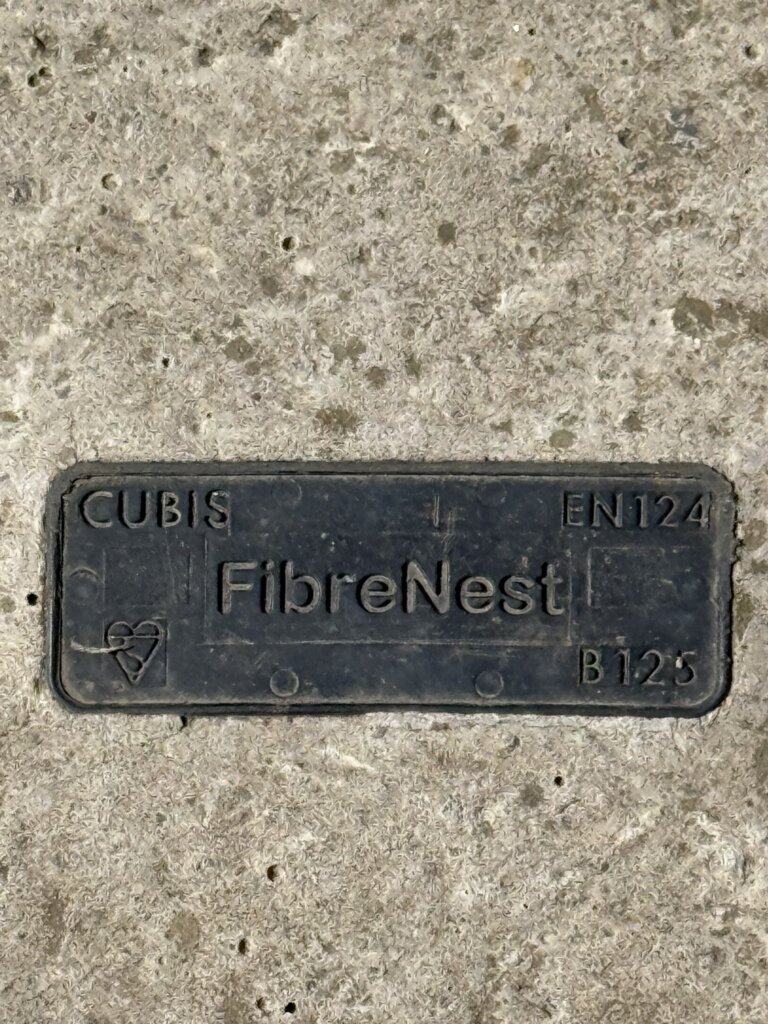
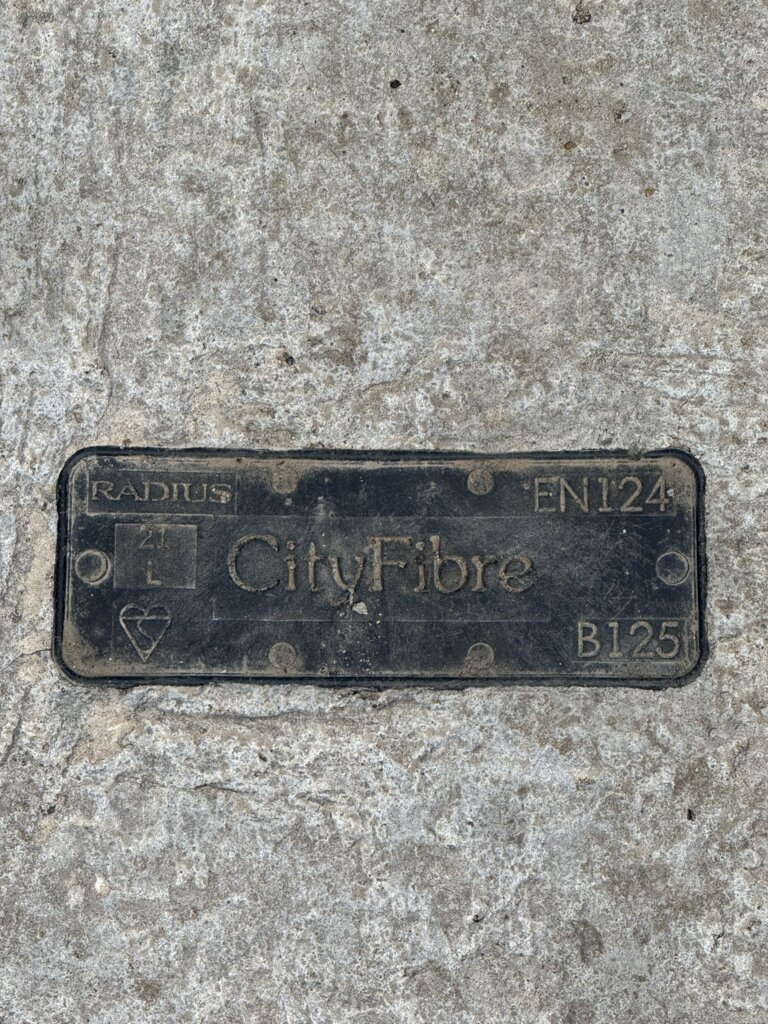
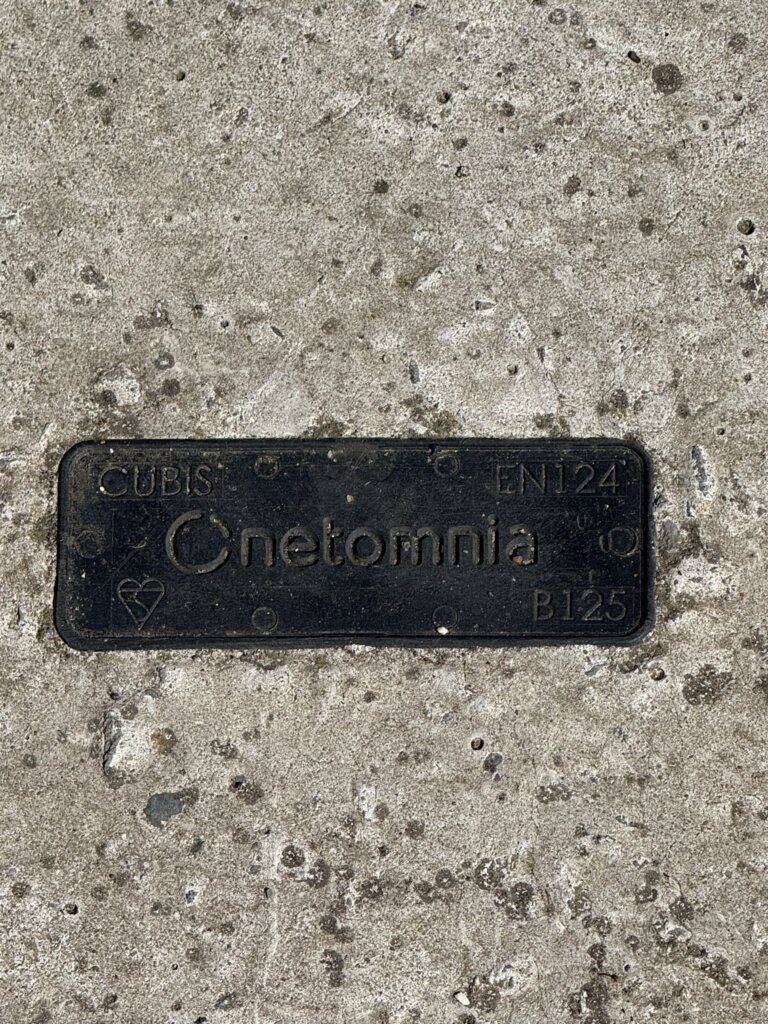
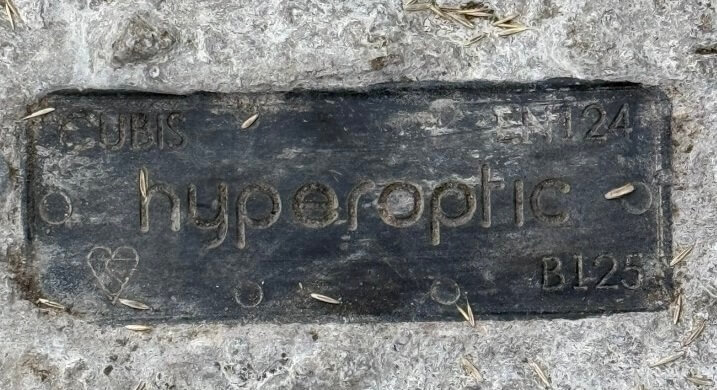
Above are fibre providers in Chatteris as of 2025, (CATV & IFNL are Vigin Media).
Availability Rollout Map
Postcode availability checker – HERE
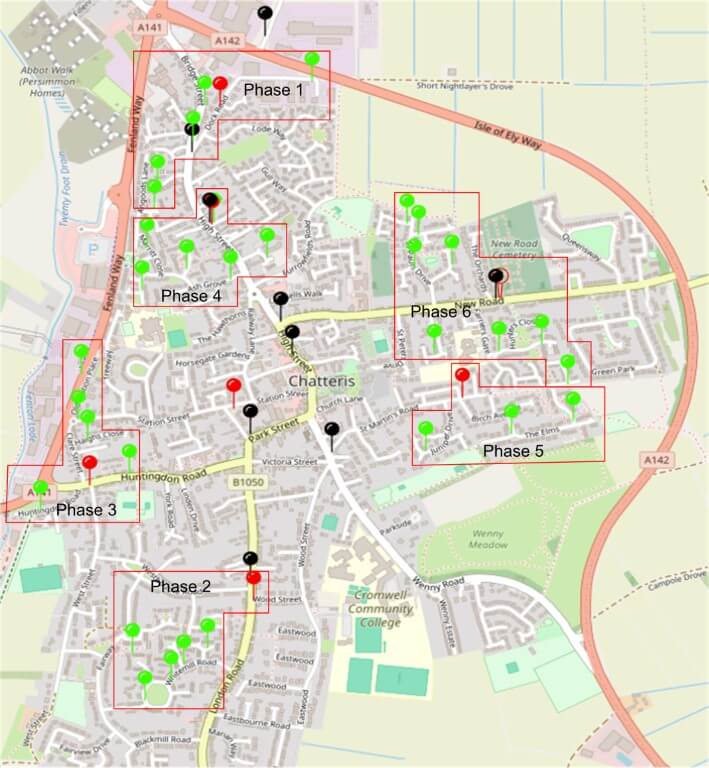
NOTE – ‘Fibre Lit’ does not indicate service is available on postcode checker, it means that fibre feeding that Phase comprising of Primary Nodes, Secondary Nodes and Aerial Nodes are connected to an Optical Line Terminal (OLT) in the Fex enabling ‘end to end’ testing of the fibre path to the field equipment.
Throughout all the completed Phases, certain areas/properties do not have the infrastructure installed for a Cityfibre service.
The map below is purely indicative of an installation timeline .
- Phase 1 – ~28 July 2025 Fibre lit
- Phase 2 – ~29 July 2025 Fibre lit
- Phase 3 – ~16 October 2025 Fibre lit
- Phase 4 – ~1 May 2026 Fibre lit
- Phase 5 – ~1 June 2026 Fibre lit
- Phase 6 – ~15 July 2026 Fibre Lit
- Phase 7 – ~ 18 September 2026 Fibre Lit (off map Doddington Road)
Cityfibre street civils and infrastructure example drawing, (NOT Chatteris).
Installation Engineers System
Kelly Communications Cityfibre Installation Platform is an engineers tool to ensure a smooth installation and customer experience, (the version is October 2023 so may not be the latest).
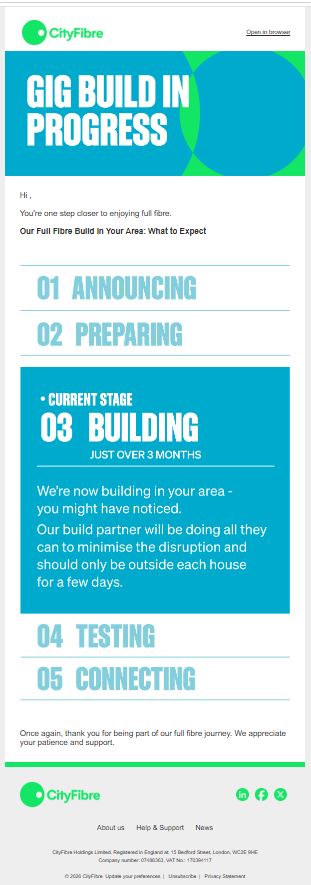
10 June 2026 – Work started installing cabinets in my immediate local area and I received email notification:
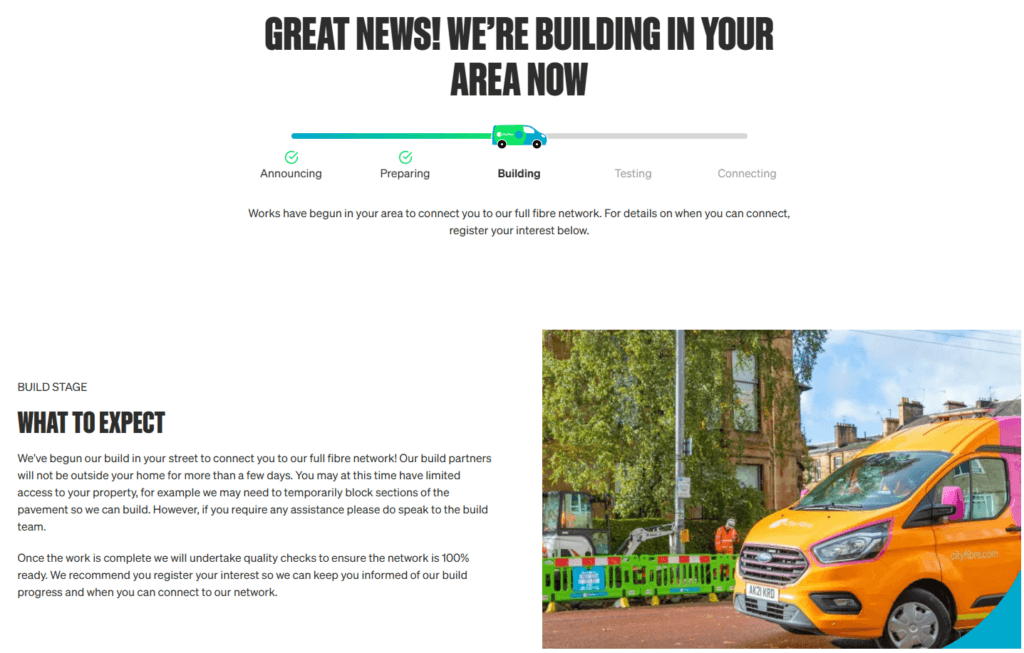
16 July 2026 – Cityfibre postcode checker for availability at my address:
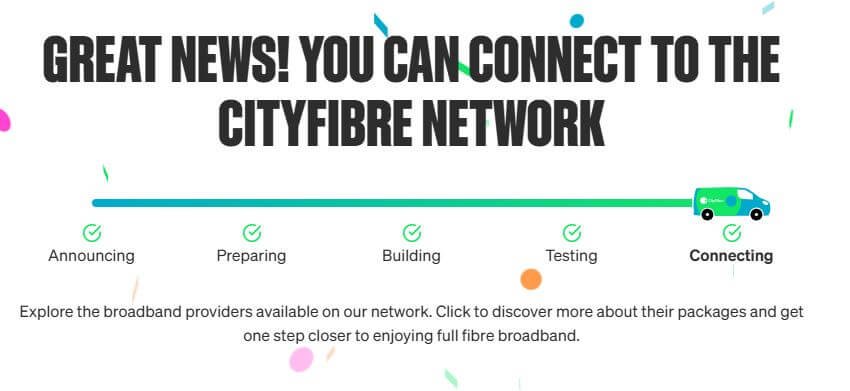
23 September 2026 – Cityfibre LIVE at my address in Chatteris, the total project time to get to this point is 3 years and 2 months!

Testing and Patching
18 September 2026 Phase 7 seems to be the conclusion of the Chatteris Cityfibre infrastructure build so far after a very minor chamber to pole microduct installation.
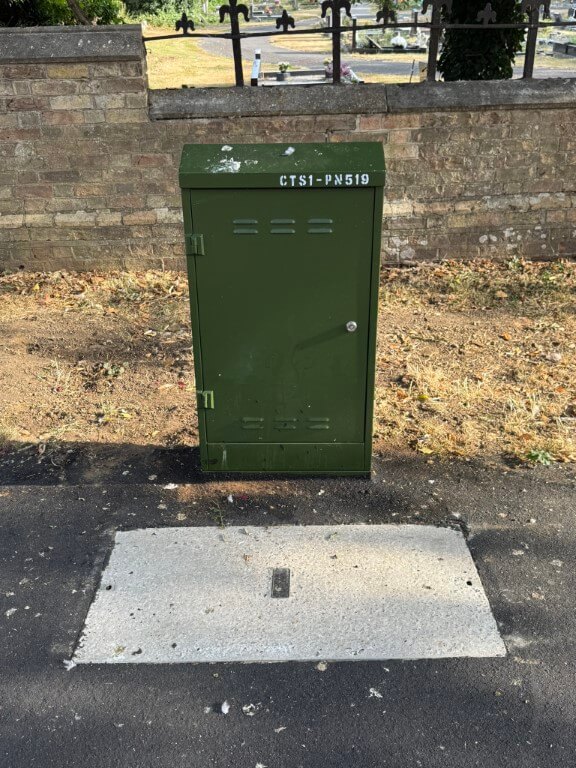
The last Primary Node in Phase 7 was PN517 Doddington Road, Phase 6 was of greater interest to me as PN519 with internal patching ongoing to feed a number of Aerial Secondary Nodes and 11 Secondary Node cabinets, SN1 is the one which can feed my property.
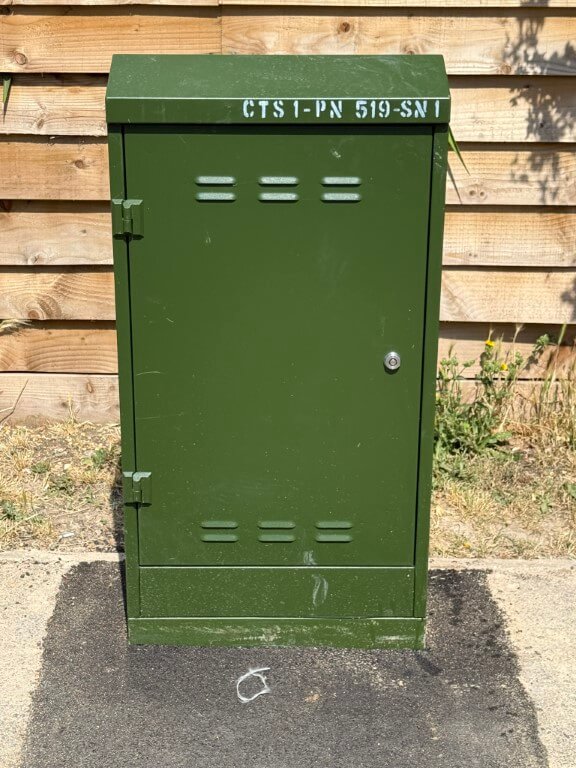
Cityfibre infrastructure works started with the Fibre Exchange (FEx) after obtaining planning permission on the 29 August 2023 and the first cabinet being installed in March 2025.
The final works is to test each fibre was undertaken by a team of three technicians, two testing cabinets and the third testing aerial nodes, all using an EXFO OTDR meter:
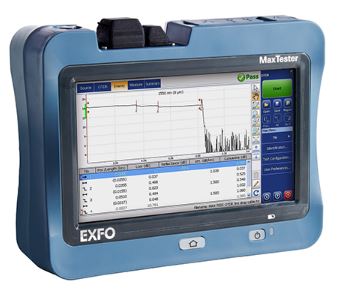
To ensure measurement accuracy, a Launch Box is used at the cabinet, this comprises of a 2.2km spool of single mode fibre, the purpose is to remove errors and improve OTDR accuracy.
3 test wavelengths are injected into the fibre, these being the normal operating wavelengths of 1310nm and 1550nm, a higher wavelength of 1625nm is also used to determine if the acceptable fibre bend radius has been exceeded or the fibre has suffered damage, this damage would not be apparent with the lower wavelength tests.
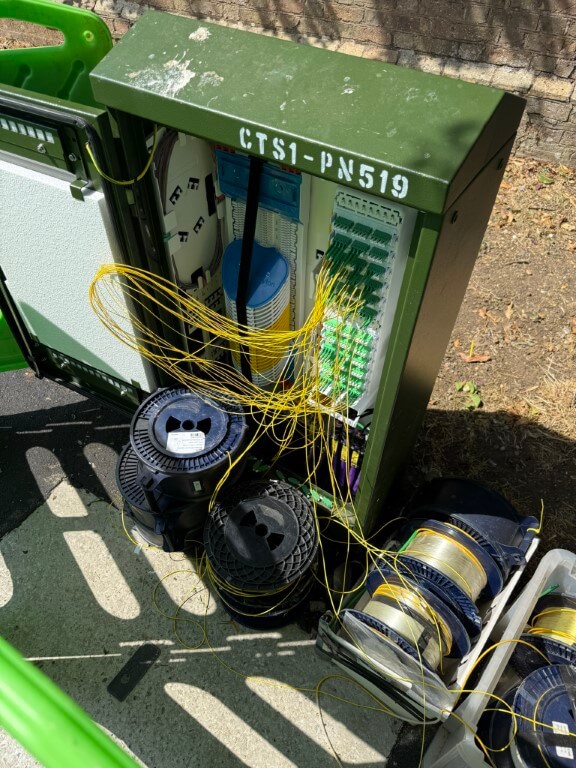
The above image shows a number of 2.2km Launch Box spools connected to the outgoing primary node ports to the secondary nodes and aerial secondary nodes, this then allows the technicians to measure OTDR at the remote ends.
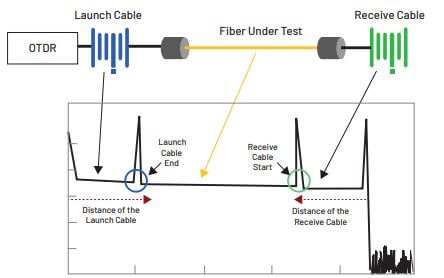
Remote measurement data is recorded and photographic evidence is taken to confirm a quality control audit trail.
Once satisfactory readings have been obtained, the launch box spools are disconnected and the cabinet ports patched to the appropriate external field nodes.
Chatteris Phase 1 after 3 years and 2 months
Firstly, a big thank you to all the incredibly hard working guys involved in the Cityfibre roll out, they have all been very patient with me asking lots of questions and it was very much appreciated.
As you can see from the roll out map approximately 50% of the town has coverage up to September 2026 and that for now Chatteris is complete, this was confirmed by the internet provider Toob who said Cityfibre informed them that they were available to offer services to the town from the 23rd September, this obviously leaves a lot of properties unable to access their network and the reduced choice of ISP’s that brings.
The infrastructure they have installed will easily cope with all of Chatteris, so they may return in the future to complete the build based on customer demand or new Project Gigabit lots being available.
The blog will be updated as new developments occur, checking the date at the start of the blog is an easy way of seeing how current things are.
Fibre Exchanges in UK
Cityfibre have deployed ~120 fibre exchanges so far in the UK, below is a list of a few planning applications regarding Cityfibre FExs which are in the public domain and found by quick searches:
- Bells Close, Lemington, Newcastle Upon Tyne – 2019/0596/01/DET
- Foster Street, Newcastle Upon Tyne – 2019/0658/01/DET
- Moorview Crescent, Newcastle Upon Tyne – 2019/1120/01/DET
- Scotswood Road, Newcastle Upon Tyne – 2019/0576/01/DET
- Upton, Chester, Cheshire – 20/00619/FUL
- Sherriff Street, Worcester – 21/00024/FUL
- Hillington Park, Glasgow – 20/0204/PP
- McKenzie Street, Paisley, Renfrewshire – 20/0563/PP
- McKenzie Street, Paisley, Renfrewshire – 20/0203/PP
- Fulbar Road, Paisley, Renfrewshire – 20/0228/PP
- Jordanthorpe Parkway, Sheffield – 24/00074/FUL
- Worrall, Sheffield – 22/00014/FUL
- Bognor Regis – BE/39/21
- Fosseway, Englishcombe, Bath – 21/03978/FUL
- Dunsinane Industrial Estate, Dundee – 19/00858/FULL
- Inverness Campus, Inverness -19/02320/FUL
- New Mart Road, Edinburgh – 18/10532/FUL
- Clermiston Road, North Edinburgh – 18/02661/FUL
- Salamander Street, Edinburgh – 18/02668/FUL
- South Gyle Crescent, Edinburgh – 18/02587/FUL
- King’s Haugh, Edinburgh – 18/02562/FUL
- Moortown, Leeds – 19/04564/FU
- Morley, Leeds – 19/00165/FU
- Swinnow, Leeds – 18/06894/FU
- Beeston, Leeds – 18/05279/FU
- Stanningley, Pudsey, Leeds – 18/05319/FU
- York Road, Leeds -18/05391/FU
- Aylesbury, Buckinghamshire – 24/02907/APP
- Westbere, Canterbury – CA/2 4/01531
- Chesterfield, Derbyshire – CHE/23/00440/FUL
- Kettering, Northamptonshire – NK/2021/0609
- Witney Road, Poole – APP/20/0151/F
- Airfield Way, Christchurch – 8/20/0861/COU
- Wilverley Road, Christchurch – 8/20/0862/COU
- Bolton – 10028/20
- Cornford Road, Blackpool – 20/0708
- Bristol Avenue, Blackpool – 20/0603
- Southwick, West Sussex -AWDM/0399/21
- Bournmouth – 7-2022-1406-KJ
- Stowmarket, Suffolk – DC/24/04811
- Brandon Lane, Sudbury, Suffolk – DC/25/01817
- Northern Road, Sudbury, Suffolk – DC/23/03294
- Barnsley – 2020/0517
- North Walsham, Norfolk – PF/24/1506
- Eastleigh, Hampshire – 21/00648/FULLS
- Chineham, Hampshire – 24/02173/FUL
- Basingstoke, Hampshire -24/01814/FUL
- Manchester Road, Huddersfield – 2019/44/91203/W
- Old Fieldhouse Lane, Huddersfield – 2018/62/92669
- Newark On Trent – 23/00735/FUL
- Hutton Moor Road, Weston-super-Mare – 21/P/0298/FUL
- Gazelle Road, Weston-super-Mare – PP-09595557
- Winchester, Hampshire -25/00636/FUL
- Eastwood, Essex – 19/00237/FUL
- Fort Road, Littlehampton – LU/375/22/PL
- Loverock Road, Reading – PL/20/0565
- Normanton, Wakefield – 22/00390/FUL
- Intake Road, Bradford – 20/02854/FUL
- Fowler Street, Bradford – 19/03591/FUL
- Algores Way, Wisbech – F/TR23/0364/FDL
- Crab Marsh, Wisbech – 23/01651/F
- Fenton Way, Chatteris – F/YR23/0656/F
- West Road, Brighton – AWDM/0399/21
- Rayleigh, Essex – 23/00291/FUL
- Wath upon Dearne, Rotherham – RB2023/0291
- Airport Business Park, Plymouth – 21/00738/CDM
- Huntingdon, Cambridgeshire – 23/00994/FUL
- Willingham, Cambridgeshire – 23/03251/FUL
- Willingham, Cambridgeshire – 23/01895/FUL
- Melbourn, Cambridgeshire – 23/01495/FUL
- Soham, Cambridgeshire – 22/01320/FUL
- Hayward Road, Warwick – W/22/0563
- Budbrooke Ind Est, Warwick – W/22/0772
- Wymondham, Norfolk – 2024/2606/F